
Karl Gotthelf von Hund was neither simply a romantic hero nor a convenient villain. His importance lies in how his system forced European Freemasonry to confront legitimacy, chivalric symbolism and the boundary between inspiring tradition and documentary history.
Part I: Saxony, Nobility and the Making of a Masonic Reformer
Introduction
The history of Freemasonry often gravitates towards familiar names. James Anderson is remembered for providing the movement with its first constitutional framework, Jean Théophile Desaguliers for helping shape the intellectual character of early English Masonry, and figures such as Ramsay, Preston and Dermott occupy prominent positions within national traditions. Yet the development of European Freemasonry was not solely driven from London or Edinburgh. During the eighteenth century, the centre of innovation shifted repeatedly across the Continent as noble patrons, military officers, philosophers and mystics adapted the Craft to suit the political, religious and intellectual currents of their own societies. Among those individuals, few exercised greater influence—or have since fallen into greater obscurity—than Karl Gotthelf von Hund.
To many English-speaking Freemasons, von Hund appears only briefly in histories of the higher degrees, usually introduced as the founder of the Rite of Strict Observance and dismissed as the aristocrat who claimed to have received authority from mysterious “Unknown Superiors.” Such summaries are not entirely inaccurate, but they are profoundly incomplete. They reduce an exceptionally complex individual to a single controversial episode while overlooking the political environment that shaped his thinking, the remarkable organisational achievements that allowed his system to spread across much of Europe, and the genuine intellectual concerns that animated eighteenth-century Continental Masonry.
Modern historians have often approached von Hund from one of two opposing perspectives. Earlier Masonic writers, particularly those sympathetic to Templar traditions, tended to portray him as the faithful custodian of an authentic inheritance stretching back through hidden lineages to the medieval Knights Templar. Twentieth-century scholarship reacted sharply against such romanticism. As documentary methods became more rigorous, many authors concluded that von Hund had either fabricated significant portions of his story or had himself become the victim of an elaborate deception. The documentary record certainly challenges many of the claims later associated with his movement. Yet reducing him to either a conscious fraud or an innocent dupe risks overlooking the complexity of the eighteenth century itself. This was an age in which political exile, aristocratic patronage, esoteric philosophy and emerging Enlightenment thought coexisted in ways that are often unfamiliar to modern readers.
Understanding von Hund therefore requires more than recounting the origins of a single Masonic rite. It demands an appreciation of the society into which he was born, the obligations of Saxon nobility, the intellectual ferment that transformed German-speaking Europe after the Thirty Years’ War, and the extraordinary proliferation of new Masonic systems that emerged during the middle decades of the eighteenth century. Only against that broader background can his later achievements—and mistakes—be understood.
Saxony in an Age of Transition
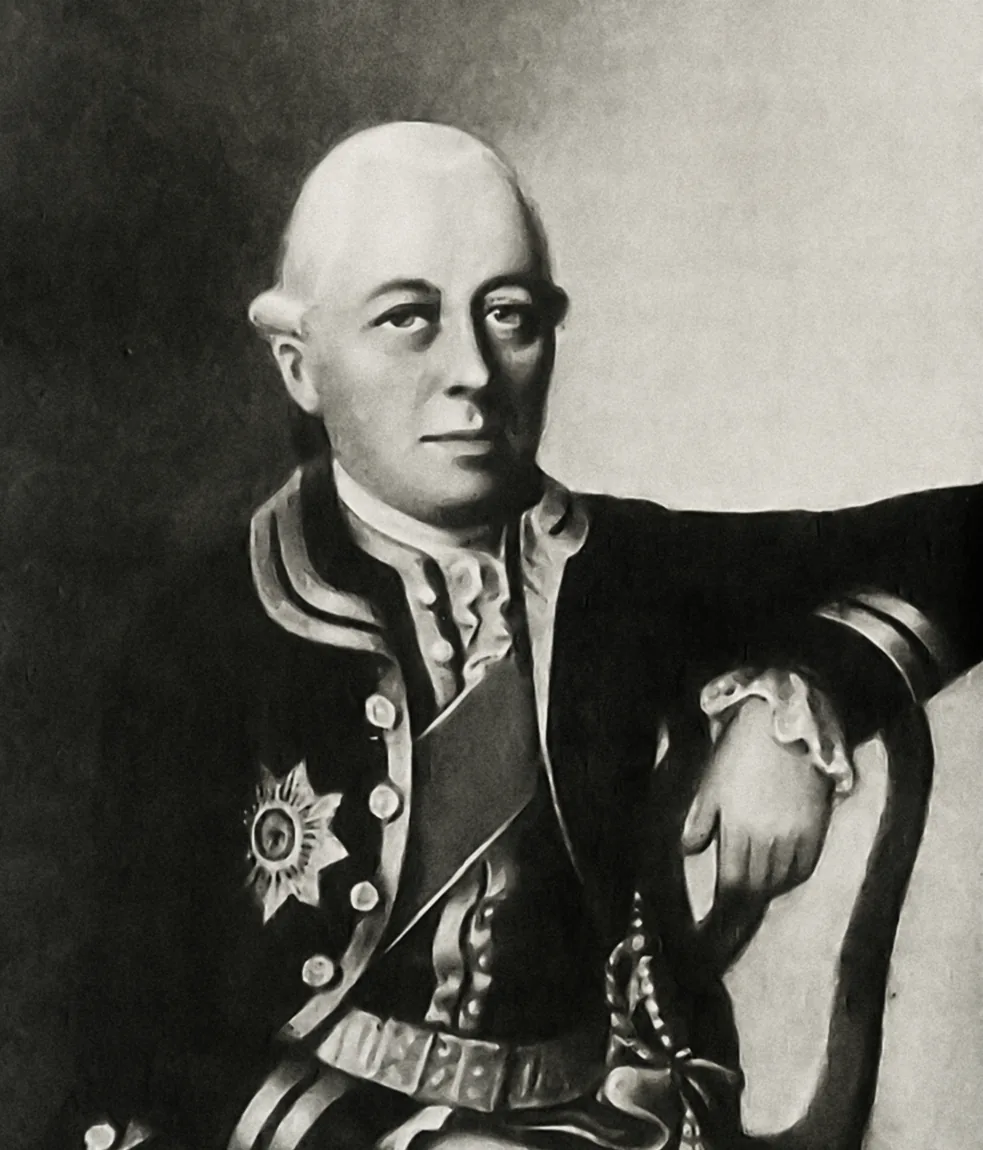
Karl Gotthelf von Hund was born on 11 September 1722 at the family estate of Altengrottkau in Upper Silesia, then part of the Electorate of Saxony, though the political geography of Central Europe was changing rapidly. To modern readers accustomed to nation-states with clearly defined borders, eighteenth-century Germany can appear bewilderingly fragmented. The entity known as the Holy Roman Empire was less a unified kingdom than a mosaic of principalities, bishoprics, imperial cities and hereditary territories, each governed according to its own traditions while owing varying degrees of allegiance to the Emperor in Vienna.
Saxony occupied an unusually significant position within this complex constitutional landscape. Its rulers enjoyed considerable prestige as Electors of the Empire and, for part of the eighteenth century, simultaneously held the Polish crown. The court at Dresden became renowned throughout Europe for its patronage of architecture, music and the decorative arts, while its administration attracted diplomats, soldiers and scholars from across the Continent. This outward brilliance, however, concealed underlying tensions. The financial burdens imposed by dynastic ambition, together with the recurring conflicts between Austria and Prussia, created an atmosphere in which political loyalties and noble obligations were frequently tested.
The generation into which von Hund was born inherited a Europe still shaped by the consequences of the Thirty Years’ War. Although nearly three-quarters of a century had passed since the Peace of Westphalia, memories of religious conflict remained embedded within aristocratic culture. Noble families regarded themselves not merely as landowners but as custodians of political stability and defenders of inherited social order. Education accordingly extended beyond literacy and estate management. Young aristocrats were expected to acquire languages, military competence, legal understanding and familiarity with court etiquette. They were prepared for public service rather than private comfort.
Von Hund’s own family belonged to this world of provincial nobility. Although neither among the wealthiest nor the most politically dominant houses of Saxony, they possessed sufficient status to secure him opportunities unavailable to most of his contemporaries. Estate administration, military service and loyalty to sovereign authority formed the natural rhythm of aristocratic life. Such expectations would profoundly influence his later understanding of Freemasonry, which he increasingly interpreted not simply as a moral fraternity but as an institution capable of restoring discipline, hierarchy and Christian chivalric virtue within a society that he believed was becoming fragmented.
Noble Upbringing and Aristocratic Formation
Accounts of von Hund’s early life remain comparatively sparse, a reminder that not every influential historical figure leaves behind abundant personal correspondence. Nevertheless, enough evidence survives to reconstruct the broad contours of his education and social formation. Like many young noblemen of his generation, he received an upbringing designed to cultivate administrative competence alongside personal honour. The values impressed upon him reflected ideals that had changed remarkably little since the late Renaissance. Courtesy, fidelity to one’s word, military courage and devotion to established authority were presented not simply as desirable virtues but as defining characteristics of noble identity.
Such principles help explain aspects of von Hund’s later career that have sometimes puzzled historians. His unwavering commitment to hierarchical structures, elaborate systems of rank and strict obedience did not emerge suddenly through his Masonic activities. Rather, they reflected assumptions already deeply embedded within the aristocratic culture in which he matured. Whereas English Freemasonry increasingly emphasised sociability among gentlemen of diverse backgrounds, many German noblemen viewed ordered hierarchy as entirely compatible with enlightened fraternity. Equality before God did not necessarily imply equality of social station.
His education almost certainly included exposure to the classical authors, Christian theology, French language and the practical sciences expected of an eighteenth-century gentleman. French, in particular, had become the language of European diplomacy and fashionable intellectual discourse. Mastery of it opened the courts of Paris, Vienna and Dresden alike, while also granting access to the rapidly expanding body of philosophical literature that circulated across the Continent. The cosmopolitan outlook cultivated among educated nobles encouraged travel, correspondence and participation in international networks—developments that would later prove central to the spread of Freemasonry itself.
The experience of noble youth in Saxony also involved extensive contact with military culture. Service to one’s prince remained both a duty and a means of advancement. Officers travelled widely, encountered foreign courts and forged relationships that frequently transcended political boundaries. These aristocratic networks became important conduits through which Masonic ideas spread during the middle decades of the eighteenth century. Lodges flourished not merely because they appealed to philosophical curiosity but because they offered educated elites a familiar social environment in which shared rituals reinforced bonds of trust across national frontiers.
By the time von Hund entered adulthood, Europe was becoming increasingly interconnected through precisely these aristocratic circles. Diplomacy, military service and learned societies created overlapping communities whose members often regarded themselves as participants in a common civilisation despite belonging to rival states. Freemasonry would emerge as one of the most successful expressions of this cosmopolitan ideal. Yet it would do so in markedly different forms depending upon local traditions and political circumstances. It was within this dynamic environment that the young Saxon nobleman began the journey that would eventually carry him beyond the borders of his homeland and towards Paris, where encounters with influential Masonic circles would transform both his own life and the future direction of Continental Freemasonry.
Part II: Soldier, Courtier and the Search for a Higher Masonry
If von Hund’s upbringing provided him with the values that would later define his Masonic philosophy, his early adult life exposed him to the political instability and intellectual diversity that characterised eighteenth-century Europe. Noble education was never intended to be merely theoretical. It prepared young aristocrats to serve, whether in the army, at court or within the administration of their sovereign. Von Hund’s transition into public life therefore followed a path that was entirely conventional for a Saxon nobleman, yet the experiences it afforded him would place him in contact with ideas and personalities far removed from the provincial world of his childhood.
Although surviving documentation concerning every stage of his military career is incomplete, contemporary records demonstrate that he entered public service at a time when Central Europe was being reshaped by almost continuous political tension. The eighteenth century has often been characterised as an age of enlightened monarchs and philosophical salons, but beneath this cultivated veneer lay an intensely competitive international system. The ambitions of the Habsburg monarchy, the growing military power of Prussia under Frederick II of Prussia, the fluctuating fortunes of the Polish–Lithuanian Commonwealth and the continuing influence of Bourbon France all contributed to a diplomatic landscape in which alliances shifted with remarkable speed. Officers of noble birth found themselves serving not only as soldiers but also as intermediaries between courts, accustomed to travelling widely and operating within circles where politics, culture and personal patronage were inseparable.
For von Hund, military service appears to have reinforced rather than diminished his belief in hierarchy, discipline and honour. Modern readers sometimes assume that Enlightenment Europe was steadily abandoning older concepts of chivalry in favour of rational administration. The reality was considerably more nuanced. Across the German states, particularly among the nobility, medieval ideals retained considerable symbolic power. Chivalric orders continued to flourish under royal patronage, elaborate court ceremonials celebrated hereditary privilege, and the language of knightly virtue remained embedded within aristocratic education. These traditions did not survive simply as nostalgic relics. They provided an ethical framework through which many nobles interpreted public duty, military service and political legitimacy.
This cultural background would later prove indispensable in understanding the appeal of the Masonic systems that emerged during the 1740s and 1750s. To English brethren, whose lodges generally emphasised sociability, charity and moral instruction, the increasingly elaborate degree systems developing on the Continent often appeared bewildering or excessive. Yet for many German aristocrats they possessed an intuitive logic. They transformed the symbolic builder of Solomon’s Temple into a Christian knight, combining biblical allegory with ideals of noble service that resonated deeply within contemporary elite culture. Von Hund did not invent this tendency, but he encountered it at precisely the moment when it was gathering extraordinary momentum.
The intellectual climate of eighteenth-century Germany further encouraged such developments. Historians have increasingly questioned the traditional portrayal of the Enlightenment as a simple triumph of reason over religion or mysticism. German intellectual life was remarkably pluralistic. Universities promoted advances in philosophy, mathematics and natural science, while Lutheran theology continued to shape public morality. Alongside these developments flourished renewed interest in alchemy, Christian Kabbalah, Hermetic philosophy and Rosicrucian literature. Rather than existing in separate worlds, these traditions frequently overlapped. A professor of natural philosophy might also collect alchemical manuscripts; a court official might participate simultaneously in scientific academies, pietist devotional circles and Masonic lodges.
Freemasonry entered this environment not as a finished institution exported from Britain, but as a remarkably adaptable framework capable of absorbing local intellectual traditions. The earliest German lodges broadly reflected English practice, particularly those founded under the authority of the Premier Grand Lodge of England. Their ceremonies centred upon the three Craft degrees, emphasising moral improvement, brotherly equality and symbolic architecture. Yet these lodges operated within societies whose expectations differed significantly from those of London merchants and provincial English gentlemen. German nobles often sought greater historical depth, stronger Christian symbolism and clearer connections with the chivalric traditions that continued to define aristocratic identity.
The result was one of the most creative—and chaotic—periods in the history of Freemasonry. During the middle decades of the eighteenth century, Europe witnessed an astonishing proliferation of so-called “higher degrees.” Many of these systems claimed to reveal teachings concealed from ordinary Craft lodges, promising deeper philosophical insight or access to ancient traditions preserved by secret custodians. Their creators drew inspiration from a wide variety of sources. Some elaborated biblical narratives surrounding the construction of the Second Temple. Others incorporated themes drawn from medieval knighthood, the Crusades or the persecution of the Knights Templar. Still others blended Christian mysticism with elements borrowed from Hermetic and Rosicrucian literature.
To later historians, the rapid multiplication of degrees has sometimes appeared little more than entrepreneurial opportunism. Certainly, there were individuals willing to invent impressive titles or elaborate ceremonies in pursuit of prestige and financial reward. Contemporary critics complained frequently of “degree merchants” who travelled between cities selling ever more spectacular initiations. Such criticisms were not without foundation. Nevertheless, to dismiss the entire movement as cynical invention would ignore the genuine intellectual appetite that fuelled its expansion. Many educated Europeans believed that ancient wisdom had been fragmented over time and that symbolic traditions preserved within secret societies might offer a means of recovering it. Freemasonry, with its combination of ritual, allegory and claims to antiquity, appeared uniquely suited to that ambition.
Among the most influential figures contributing to this transformation was Andrew Michael Ramsay, whose celebrated Oration of 1736, whether or not it immediately produced the effects later attributed to it, profoundly shaped subsequent Masonic imagination. Ramsay proposed that Freemasonry should be understood not merely as the inheritance of medieval stonemasons but as the continuation of an older tradition preserved by crusading knights. Although modern scholarship has demonstrated that many later writers exaggerated the direct historical impact of the speech, its underlying themes resonated strongly across Continental Europe. The notion that Masonry possessed aristocratic, Christian and chivalric origins proved immensely attractive to noble audiences seeking a fraternity compatible with their own social identity.
It was within this ferment that von Hund’s interests began to evolve. He belonged to a generation that encountered Freemasonry not as a settled institution but as a movement undergoing rapid experimentation. Competing rites appeared with remarkable frequency, each claiming greater authenticity than its rivals. Questions of authority became increasingly significant. If new degrees were being introduced, who possessed the right to create them? If ancient traditions truly survived, where had they been preserved? Could legitimate succession be demonstrated, or was every system merely another recent innovation clothed in venerable language?
These debates occupied far more than antiquarian curiosity. They touched directly upon eighteenth-century understandings of legitimacy. Just as monarchs justified their authority through dynastic succession and churches through apostolic continuity, many Masons sought similar foundations for their rituals. Historical pedigree conferred credibility. A rite that could plausibly trace its origins to crusading knights or forgotten custodians of sacred wisdom appeared inherently more authoritative than one openly acknowledged as a modern creation. Such assumptions would profoundly influence von Hund’s own thinking and later provide the conceptual framework upon which his greatest achievements—and greatest controversies—would rest.
By the late 1740s, the young Saxon nobleman had therefore entered a world in which political service, aristocratic culture and speculative Masonry were becoming increasingly intertwined. His education had taught him discipline and loyalty; his military experience had introduced him to international networks of noble society; the intellectual climate of Germany had familiarised him with debates concerning ancient wisdom, Christian symbolism and institutional legitimacy. What remained was the encounter that would bring these separate strands together.
That opportunity emerged through travel to France. Paris had become one of the principal centres of European Freemasonry, attracting diplomats, exiled Jacobites, noble patrons and adventurous seekers from across the Continent. Within its lodges circulated rumours of traditions extending beyond the ordinary Craft degrees, traditions said to preserve ancient authorities inaccessible elsewhere. Whether these claims possessed genuine historical substance or represented the imaginative creations of an ambitious generation remained uncertain. Yet for an aristocrat already searching for a more comprehensive understanding of Masonry, the attraction was undeniable.
When Karl Gotthelf von Hund set out for Paris, he could scarcely have anticipated that the journey would alter not only the course of his own life but, for several decades at least, the direction of Continental Freemasonry itself. The meetings he would attend, the promises he would hear and the authority he believed he had received would become the foundation upon which one of the most influential—and most controversial—Masonic systems of the eighteenth century would be constructed.
Part III: Paris, the Jacobite Court and the Birth of a Masonic Legend
When Karl Gotthelf von Hund travelled to Paris in the early 1740s, he entered a city that occupied a unique position within the Masonic landscape of Europe. London may have given institutional form to speculative Freemasonry, but Paris had become its great laboratory. New rituals appeared with astonishing frequency, competing systems flourished alongside one another, and the fraternity attracted an audience whose expectations differed markedly from those of the English lodges. French noblemen, military officers, clergymen and political exiles increasingly regarded Freemasonry not simply as a convivial society but as a vehicle through which questions of history, legitimacy and spiritual inheritance might be explored. It was within this atmosphere of experimentation that von Hund encountered ideas which would shape the remainder of his life.
The Paris of the 1740s cannot be understood without recognising the continued presence of the Jacobite exile community. Following the Glorious Revolution and the subsequent failure of the Stuart cause in Britain, successive generations of supporters of the exiled dynasty established themselves in France, where they enjoyed varying degrees of protection under the Bourbon monarchy. The court maintained by James Francis Edward Stuart and, later, his son Charles Edward Stuart attracted Scottish nobles, Irish officers, French aristocrats and foreign sympathisers who continued to believe that the Stuart monarchy represented the legitimate royal line of Britain.
For much of the nineteenth century, Masonic historians accepted almost without question that Jacobite exiles deliberately transformed Freemasonry into a vehicle for political restoration. According to this interpretation, the emergence of higher degrees, the introduction of Templar symbolism and the increasing emphasis upon loyalty and chivalry all reflected covert attempts to preserve Stuart influence beneath the cover of Masonic ritual. Modern scholarship has substantially qualified this argument. Historians such as Andreas Önnerfors, Pierre Mollier and others have demonstrated that the relationship between Jacobitism and eighteenth-century Freemasonry was considerably more complex than earlier writers imagined. While Jacobites undoubtedly participated in Continental lodges and individual degrees may have reflected their political aspirations, there is little convincing evidence that European Freemasonry functioned as a coordinated Jacobite conspiracy.
Nevertheless, to reject the conspiracy theory is not to deny Jacobite influence altogether. The exile community exercised considerable social and cultural influence within aristocratic circles, and many of its leading figures moved comfortably between diplomatic salons, military networks and Masonic assemblies. For an ambitious young Saxon nobleman seeking intellectual companionship and access to influential circles, these environments offered opportunities that extended well beyond political intrigue. They were places where questions of legitimacy, hereditary authority and historical continuity were debated with unusual intensity. Such concerns would later become central to von Hund’s own understanding of Masonic authority.
Exactly when von Hund was initiated into the higher degrees remains one of the most contested questions in his biography. Surviving evidence is frustratingly incomplete, and much of what is known derives from accounts written years after the events themselves. According to von Hund’s own later recollections, his visit to Paris culminated in admission to an exclusive circle possessing knowledge unavailable to ordinary Freemasons. Unlike the Craft lodges that had spread across Europe under English influence, this body allegedly preserved a more ancient tradition whose origins lay within Christian knighthood. It was this encounter, he would later insist, that convinced him Freemasonry represented only the visible portion of a far older and more comprehensive institution.
At the heart of his account stood one of the most enduring mysteries in Masonic history. Von Hund claimed that during his time in Paris he had been introduced to unidentified superiors who exercised authority over the deeper mysteries of the Order. Their identities, he maintained, were deliberately concealed, while their instructions were communicated only to carefully selected individuals entrusted with extending the system into new territories. They were not presented merely as respected teachers or experienced ritualists. Rather, they appeared as custodians of a legitimate succession stretching back beyond contemporary Masonry itself.
It is here that the historian encounters the boundary separating documented evidence from personal testimony. No contemporary records independently verify the dramatic meetings described in von Hund’s later narratives. No surviving correspondence identifies these mysterious authorities with certainty, nor do French archival sources provide unequivocal confirmation that such an organised hierarchy existed. This absence of documentary corroboration has understandably led many historians to approach the story with considerable scepticism. Yet scepticism should not be confused with certainty. The silence of the archives does not necessarily prove that every aspect of von Hund’s account was invented. Eighteenth-century fraternal societies frequently operated through private correspondence, oral instruction and deliberately restricted membership. The evidential gaps are therefore significant, but they are not, by themselves, decisive.
Several interpretations have consequently emerged. The most sceptical argues that the Unknown Superiors never existed in any meaningful organisational sense and that von Hund either consciously embellished his experiences or gradually persuaded himself of claims that could not withstand historical scrutiny. A second, more moderate interpretation proposes that he encountered a relatively small circle of influential Masons whose authority was later exaggerated as memories became intertwined with developing ritual traditions. A third possibility, favoured by a minority of scholars, suggests that genuine but informal networks of aristocratic patrons existed in Paris, whose members intentionally concealed their identities for political, social or personal reasons. While none of these explanations commands universal acceptance, the available evidence arguably supports the second more readily than either extreme. Von Hund almost certainly met influential individuals during his Parisian visit; whether those individuals constituted the organised hierarchy he later described remains another matter entirely.
Von Hund matters because his career exposes a central Masonic tension: the difference between symbolic inheritance and documented institutional descent.
Part IV: Crisis, Wilhelmsbad and the Measure of a Legacy
The difficulties that emerged during the later years of the Strict Observance were, in many respects, the inevitable consequence of its own success. An organisation founded upon personal trust and aristocratic patronage could function effectively while relatively small and centred upon the reputation of its founder. As membership expanded across the German states and beyond, however, those informal bonds became increasingly strained. Provincial leaders who had never met von Hund personally began to seek clearer constitutional authority. Rituals could be copied, correspondence exchanged and administrative offices established, but legitimacy required something more fundamental. The question that had lingered quietly in the background since von Hund’s return from Paris could no longer be avoided: upon whose authority did the entire structure ultimately rest?
This was not simply an abstract theological or historical debate. The eighteenth century remained deeply conscious of institutional succession. Churches defended their doctrines through apostolic continuity, monarchies justified their rule through hereditary descent, and chivalric orders traced their privileges through carefully preserved charters and royal grants. Freemasonry itself, despite its symbolic character, increasingly found its various systems competing on precisely these grounds. Every rite claimed authenticity; every founder appealed to some earlier source of authority. The Strict Observance distinguished itself by asserting that its legitimacy derived from a concealed hierarchy whose wisdom had been transmitted through carefully chosen representatives. So long as members accepted that premise, the system possessed an intellectual coherence that few rivals could match. Once doubts arose concerning the existence of those hidden authorities, the entire constitutional framework became vulnerable.
Von Hund appears to have appreciated this danger, yet his responses reveal a man whose convictions were stronger than his political instincts. Rather than abandoning or significantly modifying his earlier claims, he continued to insist that the authority entrusted to him was genuine, even if circumstances prevented him from identifying those from whom it had originated. Modern readers often interpret this persistence as evidence of deliberate deception. Such a conclusion is understandable, but it is not the only explanation available. There remains a significant difference between inventing a story for personal advantage and remaining convinced of an interpretation formed decades earlier under circumstances that cannot now be reconstructed with certainty. Contemporary accounts suggest that von Hund continued to speak with the sincerity of a man who believed his commission to be real. Whether that belief accurately reflected historical reality is another question entirely.
The intellectual climate surrounding Continental Freemasonry had also begun to change. During the middle decades of the century, elaborate historical narratives and appeals to hidden traditions had found enthusiastic audiences. By the 1770s, however, the influence of Enlightenment scholarship was becoming increasingly apparent even within Masonic circles. Learned brethren demanded documentary evidence rather than inherited assertions. Antiquarian research flourished, archives received greater attention and speculative historical claims were subjected to more rigorous examination. The very fraternity that had once welcomed romantic accounts of crusading knights and secret custodians now contained many members who wished to distinguish verifiable history from inspiring legend.
It would be misleading to portray this development as a conflict between reason and mysticism. Many of those calling for reform remained deeply committed to Christian symbolism, philosophical inquiry and esoteric interpretation. Their concern lay not with symbolism itself but with institutional credibility. If the Strict Observance wished to maintain its position as one of Europe’s leading Masonic systems, it needed to demonstrate that its constitutional claims could withstand informed scrutiny. Increasingly, members looked towards a general assembly that might resolve these uncertainties once and for all.
That opportunity arrived with the convening of the Convent of Wilhelmsbad in 1782. Held near Hanau under the patronage of enlightened German princes, the gathering brought together many of the most influential figures within Continental Freemasonry. Although later accounts sometimes portray the convent as a dramatic trial of von Hund personally, the reality was considerably more sophisticated. The delegates assembled not merely to investigate one man’s claims but to determine the future direction of an entire Masonic tradition. Years of debate concerning Templar succession, higher degrees and constitutional authority had convinced many participants that fundamental reform could no longer be postponed.
By the time the convention met, von Hund himself had already died in 1776. His absence profoundly altered the character of the proceedings. Had he been present, his personal authority, however contested, might have shaped the discussions differently. Instead, delegates were left to evaluate his legacy without the benefit—or complication—of hearing its principal architect defend it. The questions therefore became historical rather than personal. Was there sufficient evidence to maintain the claim that the Order descended from the medieval Knights Templar? Had the mysterious superiors ever existed as an identifiable governing body? Could the future of the system responsibly depend upon propositions that even its supporters struggled to verify?
The answers reached at Wilhelmsbad marked one of the decisive turning points in Masonic history. After prolonged deliberation, the convention effectively abandoned the claim of direct Templar succession. This decision did not represent a wholesale rejection of Christian chivalric symbolism. Rather, delegates concluded that symbolic inspiration could be retained without insisting upon historical continuity unsupported by documentary evidence. In doing so, they quietly acknowledged a distinction that has remained central to serious Masonic scholarship ever since: symbolic truth and historical fact are not necessarily the same thing. A ritual may communicate enduring moral principles without requiring every element of its historical narrative to be literally accurate.
Out of this process emerged the foundations of what became the Rectified Scottish Rite, largely through the work of Jean-Baptiste Willermoz. Willermoz admired much of what von Hund had achieved. He recognised the strengths of the Strict Observance—its disciplined organisation, Christian orientation and emphasis upon moral regeneration—while also appreciating that its future depended upon abandoning constitutional claims that could no longer be sustained. The resulting system preserved many of the philosophical aspirations of the earlier rite but detached them from assertions of direct Templar descent. In this sense, Wilhelmsbad did not destroy von Hund’s work; it transformed it.
This distinction is often overlooked within English-language histories, where the collapse of the Strict Observance is frequently presented as evidence that von Hund’s career ended in failure. Such a judgement imposes a remarkably narrow understanding of historical influence. Institutions seldom survive unchanged. Their ideas are adapted, revised and absorbed into later traditions that often outlive their founders by centuries. Measured by this broader standard, von Hund’s impact was immense. His administrative innovations demonstrated that international Masonic systems could operate across multiple jurisdictions with coherent governance. His insistence upon moral discipline influenced rites that continue to flourish today. His attempt to reconcile Christian chivalry with speculative Freemasonry shaped discussions that extended far beyond Germany into France, Switzerland and Scandinavia.
His reputation nevertheless remains complicated, and rightly so. The surviving evidence does not permit modern historians to endorse his historical claims uncritically. Documentary continuity between the medieval Templars and eighteenth-century Masonry has not been established, and no archival discovery has confirmed the organised hierarchy of Unknown Superiors described in later accounts. At the same time, neither does the evidence justify reducing von Hund to the caricature of an opportunistic impostor. His life reveals little of the cynicism usually associated with calculated fraud. Those who knew him generally described a man of sincerity, personal honour and unwavering conviction, even when they questioned his judgement. It is entirely possible that he became convinced of propositions whose historical foundations were far weaker than he realised. Such an error would not make him unique. Much of eighteenth-century scholarship, religious as well as secular, rested upon assumptions later generations would revise.
Perhaps that is the most appropriate way to remember Karl Gotthelf von Hund. He was neither the secret Grand Master imagined by romantic enthusiasts nor the transparent charlatan portrayed by his harshest critics. He was an eighteenth-century Saxon nobleman attempting to bring order to a rapidly changing Masonic world. He inherited an age fascinated by hidden wisdom, ancient authority and Christian chivalry, and he devoted his considerable administrative talents to giving those aspirations institutional form. Although the constitutional framework he created ultimately proved unsustainable, the questions he sought to answer—concerning legitimacy, moral purpose and the relationship between symbolism and history—remain central to Masonic thought today.
For modern Freemasons, particularly those within the English-speaking tradition, von Hund deserves to be remembered not because every claim associated with his system has survived critical examination, but because he helped shape the evolution of Continental Freemasonry at a pivotal moment in its history. Without the Strict Observance there would have been no Wilhelmsbad in the form history records, no rectification of its principles under Willermoz, and a markedly different development of Christian and chivalric Masonry across Europe. His greatest legacy lies not in the mysteries that surrounded his authority, but in the enduring influence of the debates he inspired. More than two centuries after his death, historians continue to revisit his life for precisely that reason. Few forgotten men have left so visible an imprint upon institutions that continue to shape the Masonic world.

A concise chronology
- Birth in Upper Silesia
Von Hund was born on 11 September 1722 into the Saxon provincial nobility.
- Paris and higher-degree Masonry
His later account placed decisive encounters in Paris, including claims of authority from concealed superiors.
- Strict Observance takes shape
The Templar-inflected system associated with von Hund began to acquire ritual and administrative form.
- Rapid spread and pressure
The rite attracted aristocratic and educated members across German-speaking Europe while raising questions about authority.
- Von Hund dies
He died before the decisive Wilhelmsbad assembly could test the future of his system.
- Convent of Wilhelmsbad
Delegates redirected the movement away from literal Templar succession and toward rectification under figures such as Willermoz.
Bibliography and further reading
The essay is based on the draft supplied for publication, with the bibliography retained as a reading trail. Readers should treat manuscript references and specialist works as signposts for further research rather than as online joining or ritual sources.
Primary Sources
- Hund, Karl Gotthelf von. Letters and Circulars of the Rite of Strict Observance. Various surviving manuscripts, 1751–1776.
- Le Forestier, René. La Franc-Maçonnerie Templière et Occultiste aux XVIIIe et XIXe Siècles. Paris: Aubier-Montaigne, 1970. (Contains extensive publication and analysis of original eighteenth-century documents.)
- Proceedings of the Convent of Wilhelmsbad, 1782. Various manuscript and published editions.
- Ramsay, Andrew Michael. Discours prononcé à la réception des Francs-Maçons (The Ramsay Oration), 1736.
Secondary Sources
- Bernheim, Alain. Freemasonry: A Journey through Ritual and Symbol. Paris: Editions Numérilivre, 2015.
- Dachez, Roger. Histoire de la Franc-Maçonnerie Française. Paris: Presses Universitaires de France, 2003.
- Dachez, Roger. The Authentic School of Freemasonry. Paris: Dervy, 2011.
- Hamill, John. The Craft: A History of English Freemasonry. Wellingborough: Crucible, 1986.
- Hamill, John, and Robert Gilbert. Freemasonry: A Celebration of the Craft. London: JG Press, 2004.
- Jacob, Margaret C. Living the Enlightenment: Freemasonry and Politics in Eighteenth-Century Europe. Oxford: Oxford University Press, 1991.
- Jacob, Margaret C. The Origins of Freemasonry: Facts and Fictions. Philadelphia: University of Pennsylvania Press, 2006.
- Ligou, Daniel (ed.). Dictionnaire de la Franc-Maçonnerie. Paris: Presses Universitaires de France, 2012.
- McLeod, Robert. Speculative Masonry: A Historical Perspective. London: Lewis Masonic, 1988.
- Mollier, Pierre. La Franc-Maçonnerie. Paris: Gallimard, 2020.
- Naudon, Paul. Histoire, Rituels et Tuileur des Hauts Grades Maçonniques. Paris: Dervy, 1984.
- Önnerfors, Andreas. Freemasonry: A Very Short Introduction. Oxford: Oxford University Press, 2017.
- Önnerfors, Andreas. “Freemasonry.” In The Oxford Handbook of the Enlightenment, edited by Mark Goldie and Robert Wokler. Oxford: Oxford University Press, 2016.
- Snoek, Jan A. M. Initiating Women in Freemasonry: The Adoption Rite. Leiden: Brill, 2012. (Provides valuable context for the evolution of Continental higher-degree systems.)
- Stevenson, David. The Origins of Freemasonry: Scotland’s Century, 1590–1710. Cambridge: Cambridge University Press, 1988.
- Stevenson, David. The First Freemasons: Scotland’s Early Lodges and Their Members. Aberdeen: Aberdeen University Press, 1988.
- Willermoz, Jean-Baptiste. Instructions and Ritual Texts of the Rectified Scottish Rite. Various eighteenth-century manuscripts and later critical editions.
Recommended Further Reading
- de Hoyos, Arturo, and S. Brent Morris. Freemasonry in Context: History, Ritual, Controversy. Lanham, MD: Lexington Books, 2004.
- Le Forestier, René. La Franc-Maçonnerie Écossaise et la France. Paris: La Table d’Émeraude, reprint edition.
- McLeod, Wallace. The Grand Design: Essays on the Craft and Its Symbols. London: Lewis Masonic, 1991.
- Stevenson, David. Freemasonry: Symbols, Secrets, Significance. London: Collins, 2017.
Notes on the sources
The most authoritative modern study of Karl Gotthelf von Hund and the Rite of Strict Observance remains René Le Forestier’s monumental research, which draws extensively upon surviving eighteenth-century correspondence, ritual texts and administrative records. Although originally published in French, it continues to underpin much subsequent scholarship on the subject.
For the wider European context, the works of Margaret C. Jacob, David Stevenson, Andreas Önnerfors, Roger Dachez and Pierre Mollier provide balanced and academically rigorous interpretations of the origins and development of eighteenth-century Freemasonry. Together, these studies distinguish carefully between documentary evidence, contemporary belief and later Masonic legend, an approach that has informed this paper throughout.