
Western Canada
British Columbia, Alberta, Saskatchewan and Manitoba
Four sovereign jurisdictions shaped by settlement, provincial formation and earlier Canadian or overseas warrants.
Explore Alberta →Country guide / Canada
Canadian Craft Masonry is provincial. Royal Arch, Cryptic, Templar, Scottish Rite and allied bodies then offer optional routes under their own authorities.
01 / Begin with the province
Canada's ten provincial Grand Lodges are sovereign jurisdictions. The historic title “Grand Lodge of Canada in the Province of Ontario” does not make Ontario's body a national authority.
Identify the Grand Lodge that warrants the Lodge, then check every later body separately. A familiar name or degree does not establish recognition, eligibility or an identical sequence across provinces.
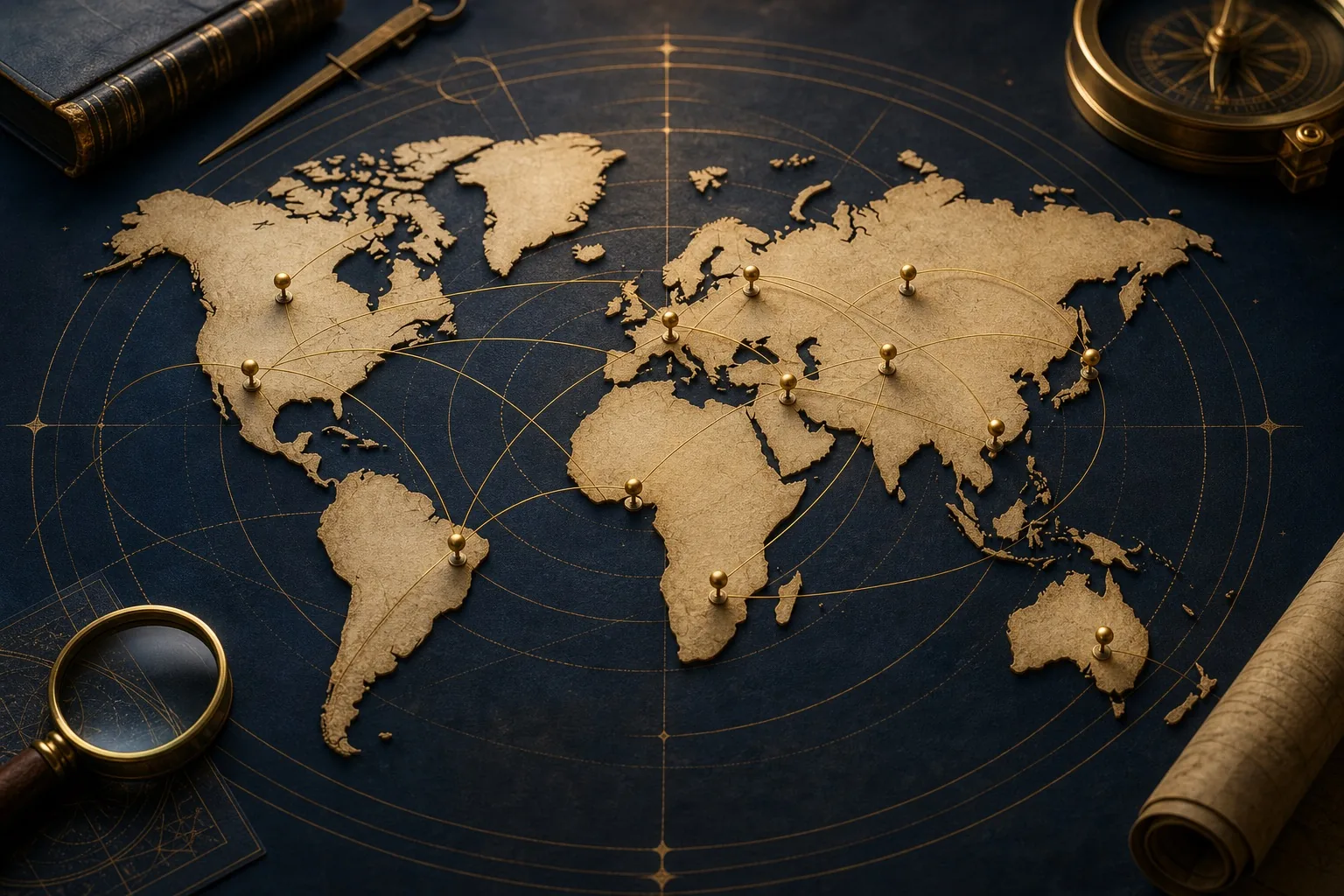
02 / Connection map
Canada has ten sovereign provincial Craft Grand Lodges. Optional Chapter, Council, Templar, Scottish Rite and fellowship routes are separately governed.
Educational overview only. Recognition, eligibility and progression vary by jurisdiction. Always confirm current requirements with the relevant official body.
Think of Canadian Freemasonry as a network rather than a national ladder. Provincial Craft membership is the foundation; other routes cross provincial boundaries through separate governing structures.
03 / Provincial foundations
Each Grand Lodge governs its own warranted Lodges, candidate rules and recognition relationships.
Four sovereign jurisdictions shaped by settlement, provincial formation and earlier Canadian or overseas warrants.
Explore Alberta →Ontario preserves the historic “Grand Lodge of Canada” name; Quebec's 1869 formation demonstrates why that title is not national.
Explore Ontario →Four distinct Grand Lodges with histories extending through pre-Confederation and overseas constitutional activity.
Explore Nova Scotia →04 / A constitutional chronology
A Grand Lodge foundation date records institutional independence, not the first Masonic activity in its territory.
Military, commercial and settler networks carried English, Scottish, Irish and colonial warrants into the territories that became Canada. Local histories therefore begin before modern provincial boundaries.
The body now styled the Grand Lodge of Canada in the Province of Ontario formed before Confederation. Its later territorial wording prevents a historic name being mistaken for national jurisdiction.
Nova Scotia, New Brunswick, Quebec, Manitoba and Prince Edward Island established Grand Lodges as Canadian federal and provincial structures changed.
Alberta and Saskatchewan formed provincial Grand Lodges soon after becoming provinces, drawing together lodges previously governed elsewhere.
The newest of the ten provincial Grand Lodges followed a long period in which local lodges worked under English and Scottish constitutions.
05 / Finding your route
Use the official provincial Grand Lodge to locate a warranted Lodge. Do not assume that a nearby building, social account or familiar emblem proves constitutional identity.
Recognition decisions belong to Grand Lodges. Visitors should use their own Grand Secretary rather than relying on internet lists or the similarity of ritual names.
Chapter, Council, Templar and Scottish Rite bodies govern their own qualifications. The route familiar in one province may be administered differently in another.
Canada's distances can make travel more significant than meeting frequency. Ask for the annual calendar, dues, dining, regalia and rehearsal expectations before joining.
06 / Principal optional routes
These routes complement Craft membership but do not convert it into a national hierarchy.
Chapter and Council traditions explore Temple, recovery and preservation narratives through separately governed bodies.
Read the Royal Arch guide →An explicitly Christian Masonic Templar route with its own prior qualifications and Canadian authority.
Read the Templar guide →A numbered-degree system governed by Canada's Supreme Council and organised through local Valleys.
Read the Scottish Rite guide →07 / Useful distinctions
The Grand Lodge of Canada in the Province of Ontario is Ontario's sovereign Craft authority. It neither warrants nor supervises Lodges under the other nine provincial Grand Lodges.
Royal Arch, Cryptic and Templar bodies are connected in common North American usage, but they retain separate governance and may not follow one identical Canadian sequence.
The Canadian Supreme Council is sovereign in its jurisdiction. The rite's name does not place it under Scotland or either United States Supreme Council.
Frequently asked
There is a body with that historic phrase in its title, but its full name is the Grand Lodge of Canada in the Province of Ontario. Canada has no single national Craft Grand Lodge.
Ten: Alberta, British Columbia and Yukon, Manitoba, New Brunswick, Newfoundland and Labrador, Nova Scotia, Prince Edward Island, Quebec, Saskatchewan and Ontario.
No. Some bodies have national authorities, others use provincial structures, and local availability varies. Always identify the governing body rather than relying only on the order name.
Not for every optional route. Royal Arch is commonly required for Cryptic or Templar pathways, while Scottish Rite and Shriners may be approached from eligible Craft membership. Current rules vary.
No. This is an independent educational guide. Recognition, visiting and eligibility must be confirmed through the relevant official Masonic authorities.
Detailed resources
Sixteen detailed guides distinguish Canada's ten provincial Craft jurisdictions from its principal capitular, cryptic, chivalric, philosophical and fellowship routes.
 Provincial Craft Grand Lodge
The sovereign regular Craft Grand Lodge serving Alberta.
Read the complete guide → Provincial Craft Grand Lodge
The regular Craft authority for British Columbia and Yukon.
Read the complete guide →GLMProvincial Craft Grand LodgeThe sovereign regular Craft Grand Lodge for Manitoba.
Read the complete guide → Provincial Craft Grand Lodge
The sovereign regular Craft Grand Lodge for New Brunswick.
Read the complete guide → Provincial Craft Grand Lodge
The regular Craft authority for Newfoundland and Labrador.
Read the complete guide → Provincial Craft Grand Lodge
The sovereign regular Craft Grand Lodge for Nova Scotia.
Read the complete guide → Provincial Craft Grand Lodge
The sovereign regular Craft Grand Lodge for Prince Edward Island.
Read the complete guide → Provincial Craft Grand Lodge
The regular Craft Grand Lodge headquartered in Quebec and working in a distinct bilingual cultural setting.
Read the complete guide → Provincial Craft Grand Lodge
The sovereign regular Craft Grand Lodge for Saskatchewan.
Read the complete guide → Provincial Craft Grand Lodge
The sovereign regular Craft Grand Lodge for Ontario, despite its historic national-sounding name.
Read the complete guide → Provincially governed Chapter systems
A guide to Canada’s separately governed provincial and territorial Royal Arch systems.
Read the complete guide →RSMRoyal and Select Master systemThe Canadian Council tradition of Royal, Select and related Cryptic degrees.
Read the complete guide → Christian chivalric order
Canada's sovereign governing body for its Masonic Templar tradition.
Read the complete guide → National Supreme Council rite
The Canadian jurisdiction of the Ancient and Accepted Scottish Rite under its own Supreme Council.
Read the complete guide → Council-based degree and research body
A small Canadian Council-based body whose accessible public material emphasises membership resources and education but leaves key constitutional details restricted.
Read the complete guide → Masonic fellowship and philanthropy
Canadian Shrine temples within the international Master Mason fraternity and philanthropic network.
Read the complete guide →Official checks
Beyond the Craft is independent and does not speak for any Canadian Grand Lodge or Masonic body. Confirm current requirements before joining or visiting.