
GLI
Sovereign Indian Grand Lodge
Grand Lodge of India
Constituted on 24 November 1961 and organised through Regional Grand Lodges for Northern, Southern, Eastern and Western India.
Explore the complete guide →Country guide / India
India's Masonic landscape combines the Grand Lodge of India with continuing English, Irish and Scottish structures. Authority comes before progression.
01 / Read the warrant first
The Grand Lodge of India was constituted in New Delhi in 1961, but not every lodge then working in India joined it. Recognised overseas constitutions therefore remain part of the present landscape.
Before asking what comes next, identify which Grand Lodge warrants the Craft lodge. Royal Arch, Mark and other qualifications cannot safely be transferred from one constitution's sequence to another.
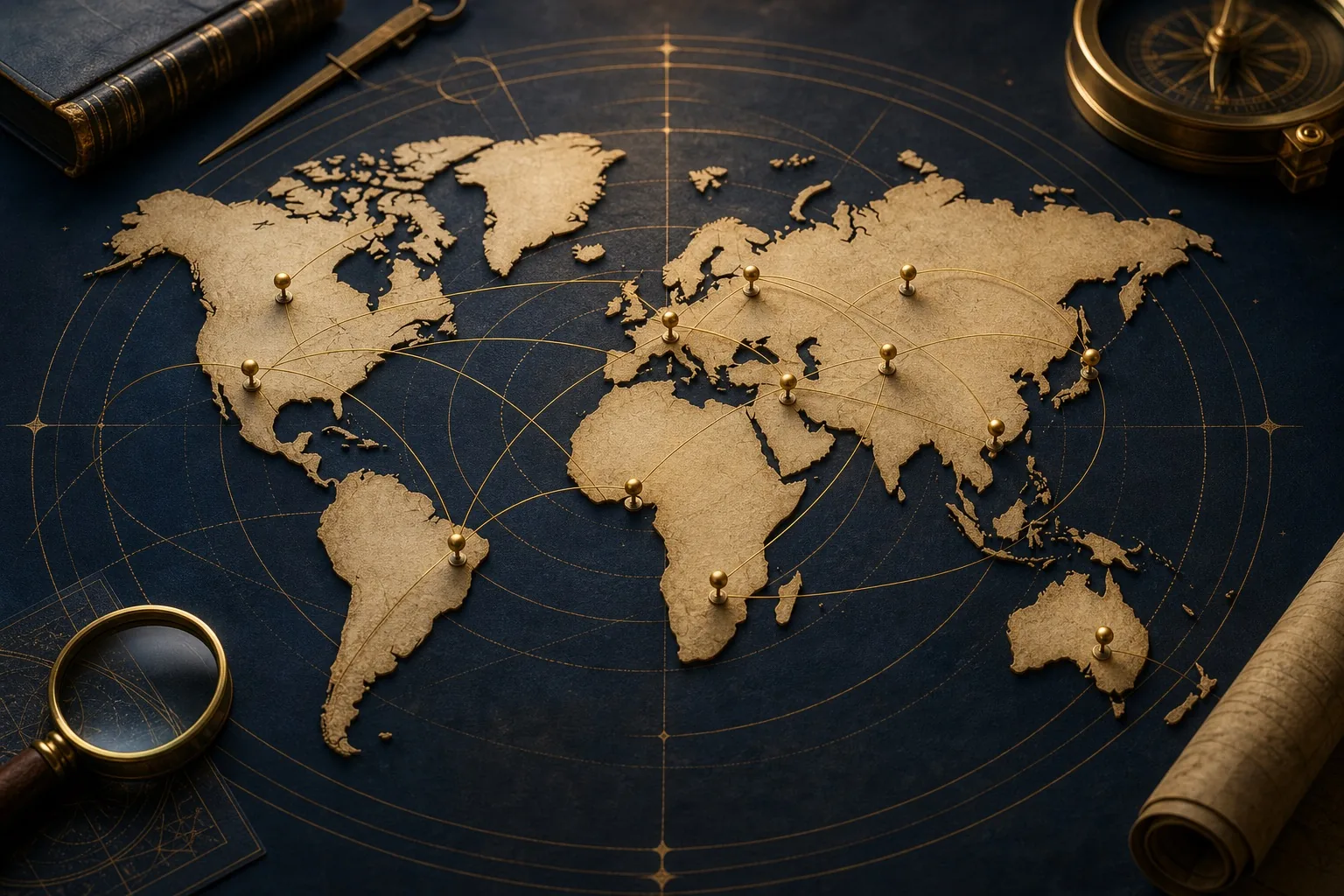
02 / Connection map
India has a sovereign national Grand Lodge alongside continuing English, Irish and Scottish constitutional structures. The connected Indian Royal Arch, Mark and Royal Ark Mariner routes must be read through the authority that governs them.
Educational overview only. Recognition, eligibility and progression vary by jurisdiction. Always confirm current requirements with the relevant official body.
Think of Indian Freemasonry as recognised constitutional routes sharing a country, not as a single pyramid. The official warrant and governing body determine membership, visiting and progression.
03 / Craft authorities
These are parallel sources of Craft authority. None is a degree beyond another.
Constituted on 24 November 1961 and organised through Regional Grand Lodges for Northern, Southern, Eastern and Western India.
Explore the complete guide →
UGLE's current directory lists Bengal, Bombay, Madras and Northern India as District Grand Lodges.
Understand the parallel constitutions →
The Grand Lodge of Ireland lists a continuing overseas Province in India under its own constitutional authority.
Check the Irish directory →Scottish activity is constitutionally separate and should be checked against the Grand Lodge of Scotland's current directory.
Check the Scottish directory →04 / Constitutional chronology
Institutional dates describe changes in governance, not the age of every lodge or ceremony.
English, Irish and Scottish Freemasonry developed in India through colonial, military, commercial and civic networks. Individual lodge histories must be checked against their own records.
The official Indian history records that the Grand Masters of England and Ireland and the Immediate Past Grand Master Mason of Scotland discussed an independent Indian Grand Lodge in London.
A representative steering process led to a lodge vote. The official account states that 145 of 277 eligible lodges opted to join the proposed Grand Lodge of India.
The new sovereign Grand Lodge was constituted at the Ashoka Hotel in New Delhi on 24 November, with delegations from Scotland, Ireland and England.
The Grand Lodge of India and recognised overseas constitutional structures continue side by side. Their lodges share geography without sharing one administration.
05 / Finding your route
The Grand Lodge of India publishes an enquiry route and lodge information. Its public essentials include being a man aged at least 21 and belief in a Supreme Being; the full local process still applies.
Recognition and intervisitation are constitutional decisions. A familiar emblem, building or ritual name is not enough to settle them.
The Indian Royal Arch and Mark arrangements are visibly connected with the Grand Lodge of India. An English, Irish or Scottish lodge member should use the route authorised by that constitution.
Meeting frequency may be modest, but travel between cities can be significant. Ask about the annual calendar, rehearsal, dining, dues and regalia before joining another body.
06 / Connected Indian routes
The Grand Lodge of India publishes distinct officers, lodge or Chapter rolls and calendars for these systems.
A Master Mason route centred on rebuilding, recovery and the Sacred Name, administered through Chapters and regional officers.
Read the Royal Arch guide →An optional degree exploring workmanship, responsibility and recognition through authorised Mark Lodges.
Read the Mark guide →A compact, nautical and preservation-focused degree commonly connected with Mark Masonry.
Read the Royal Ark Mariner guide →07 / Useful distinctions
The Grand Lodge of India is a sovereign national Grand Lodge, while recognised overseas constitutions also continue to warrant lodges in India.
Royal Arch, Mark and Royal Ark Mariner appear within the Grand Lodge of India's public institutional framework, but each has distinct officers, units and regulations.
Friendly relations between Grand Lodges do not automatically transfer membership, office, rank or eligibility into another constitution's appendant system.
Frequently asked
No. It is the sovereign national Grand Lodge constituted in 1961, while recognised English, Irish and Scottish constitutional structures also continue. Recognition should always be checked through the relevant Grand Lodge.
Its official site publishes Royal Arch, Mark and Royal Ark Mariner structures, officers, units and calendars in close association with the Grand Lodge. Their detailed regulations and local administration must still be checked separately.
Not automatically. Constitution, recognition, local availability, waiting periods and proposal rules matter. Begin with the secretary of your own lodge or governing body.
No. It is an optional degree with its own Noah-themed ceremony and administration, commonly connected with Mark Masonry.
No. This is an independent educational guide. Confirm every current requirement with the relevant Grand Lodge, Chapter or authorised body.
Detailed resources
Five detailed guides distinguish India's sovereign national structure, connected Royal Arch, Mark and Royal Ark Mariner routes, and the parallel overseas constitutions that remain active.
The sovereign Indian Grand Lodge constituted in New Delhi in 1961 and organised through four Regional Grand Lodges.
Read the complete guide → Capitular order
The Royal Arch system administered in close constitutional association with the Grand Lodge of India.
Read the complete guide →MMMark degree systemIndia's Mark Lodges administered through the Grand Lodge of India's published Mark structure.
Read the complete guide →RAMNautical degree systemRoyal Ark Mariner Lodges and administration published within the Grand Lodge of India's wider Masonic structure.
Read the complete guide →EC / IC / SCParallel Craft jurisdictionsRecognised English, Irish and Scottish constitutional structures that continue alongside the Grand Lodge of India.
Read the complete guide →Official checks
Beyond the Craft is independent and does not speak for any Indian or overseas Masonic authority.