
Provincial Craft Grand Lodge / Canada
Grand Lodge of Newfoundland and Labrador
The Grand Lodge of Newfoundland and Labrador is Canada’s youngest provincial Craft Grand Lodge, consecrated on 1 November 1997. It brought participating Lodges into local sovereignty after long English and Scottish constitutional histories; those older roots do not make the present Grand Lodge older than 1997.
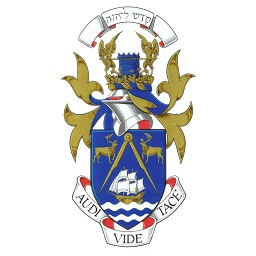
This is chiefly a guide to constitutional position in Canada: what Grand Lodge of Newfoundland and Labrador in Canada governs, how its local bodies are warranted and where recognition questions need an official answer. By Beyond the Craft Editorial Team · Published 14 June 2026 · Last reviewed 21 June 2026 · 8 min read.
What it is
Grand Lodge of Newfoundland and Labrador is a governing or coordinating body rather than a degree to be collected. The useful local questions concern its warranted Lodges, recognition relationships, territorial authority and candidate process.
Why people explore it
Readers interested in Atlantic Masonic history and a close-knit provincial constitution.
What not to assume
Grand Lodge of Newfoundland and Labrador is not a degree above another Masonic body. It is a governing or coordinating structure, and its authority and recognition cannot be inferred from size, age or a familiar emblem.
Documented chronology
Older Lodges, younger sovereignty
The official history names English- and Scottish-constitution Lodge lines that predate provincial independence and records the 1997 consecration as a distinct event. [1]
This avoids two opposite errors: treating Freemasonry as new to the province in 1997, or treating the 1997 Grand Lodge as institutionally continuous with every earlier warrant. [1]
The completion of Canada’s provincial pattern
The consecration account describes visiting Grand Lodge representation and installation of the first Grand Master in St John’s. The public site presents Grand Lodges as independent rather than components of a central world authority. [1] [3]
UGLE now lists Newfoundland and Labrador separately among recognised Canadian Grand Lodges. Recognition confirms relationship, not subordination. [4]
A detailed published joining process
The candidate page requires belief in a Supreme Being, age 21 or over, high moral standards and freedom from a criminal record or pending similar proceedings. [2]
It describes two sponsors, a visiting committee, a report to Lodge and a Lodge vote on the petition. This is much more specific than a national referral form and should take priority for this jurisdiction. [2]
Who may value it
The jurisdiction may suit a man seeking locally sovereign Craft Masonry, clearly explained admission steps and Lodge histories shaped by both English and Scottish predecessors. [1] [2]
Nova Scotia offers an older Atlantic Grand Lodge comparison; Canadian Royal Arch remains a separate further body rather than a stage administered by Craft Grand Lodge. [4]
Key distinction
A recent sovereign Grand Lodge can govern Lodges with much older records. Newfoundland and Labrador is the clearest Canadian example of why those timelines must be separated.
Key questions
Frequently asked questions
What most distinguishes Grand Lodge of Newfoundland and Labrador?
A recent sovereign Grand Lodge can govern Lodges with much older records. Newfoundland and Labrador is the clearest Canadian example of why those timelines must be separated.
Who may join Grand Lodge of Newfoundland and Labrador?
Candidates approach a warranted local lodge and follow the current provincial enquiry, sponsorship, belief and ballot process. Check the current Lodge or district directory and ask the named constitutional office for advice relevant to Canada.
How should its history be understood?
Enduring Lodges developed under English and Scottish constitutional warrants. The useful chronology is the record of warrants, unions and constitutional authority, not the age claimed by a local tradition.
What should I compare with Grand Lodge of Newfoundland and Labrador?
Start with Grand Lodge of Nova Scotia and Royal Arch Masonry in Canada. Compare what each authority warrants, recognises and administers before comparing ritual labels.
- Grand Lodge of Newfoundland and Labrador: history ↗Grand Lodge of Newfoundland and Labrador · Official organisational source · Retrieved 21 June 2026 · Supports: history, 1997 consecration, predecessor Lodges.
- Grand Lodge of Newfoundland and Labrador: become a Freemason ↗Grand Lodge of Newfoundland and Labrador · Official organisational source · Retrieved 21 June 2026 · Supports: eligibility, application, committee and ballot.
- Grand Lodge of Newfoundland and Labrador: about ↗Grand Lodge of Newfoundland and Labrador · Official organisational source · Retrieved 21 June 2026 · Supports: identity, independent Grand Lodges, purpose.
- UGLE: recognised foreign Grand Lodges ↗United Grand Lodge of England · Official organisational source · Retrieved 21 June 2026 · Supports: recognition, Canadian jurisdictions.
Continue exploring