
Freemasonry did not simply acquire a history. It also developed ways of deciding what counted as history. The Victorian turn towards archives, comparison and verifiable evidence changed the fraternity’s understanding of its own past without emptying its traditional narratives of meaning.
Why origins mattered
Few questions have occupied Freemasons more persistently than that of origins. From the earliest decades of organised speculative Freemasonry, writers sought to explain where the fraternity had come from, what traditions it inherited and how it should understand its place within history. Their answers were rarely modest. They connected the Craft to the builders of Solomon’s Temple, the priesthoods of ancient Egypt, the philosophical schools of Greece, medieval guilds and, perhaps most famously, the Knights Templar.
Modern historians generally treat claims of direct institutional descent from those ancient or medieval bodies with scepticism. The surviving evidence instead places the documented development of modern Freemasonry within Britain and Ireland between the late sixteenth and early eighteenth centuries, while leaving room for debate about influences, transmission and the relationship between operative and speculative practice.
The change from expansive ancestry to critical history was neither immediate nor complete. Victorian Masonic scholars did not merely revise dates or reject colourful legends. They altered the terms on which historical claims were assessed. Their work belongs to a wider nineteenth-century change in attitudes towards authority, evidence and tradition.
The eighteenth-century search for antiquity
The eighteenth century was deeply concerned with lineage. Political systems, churches, universities and noble families all sought continuity with an ancient past. Antiquity conferred authority, while novelty could invite suspicion.
Freemasonry, increasingly visible as an organised institution in the early eighteenth century, faced a particular challenge. It was expanding and socially prominent, yet its precise origins were obscure. Early writers answered that uncertainty with what can usefully be called mythic history: narratives that conveyed legitimacy, identity and moral meaning rather than conclusions established through modern archival method.
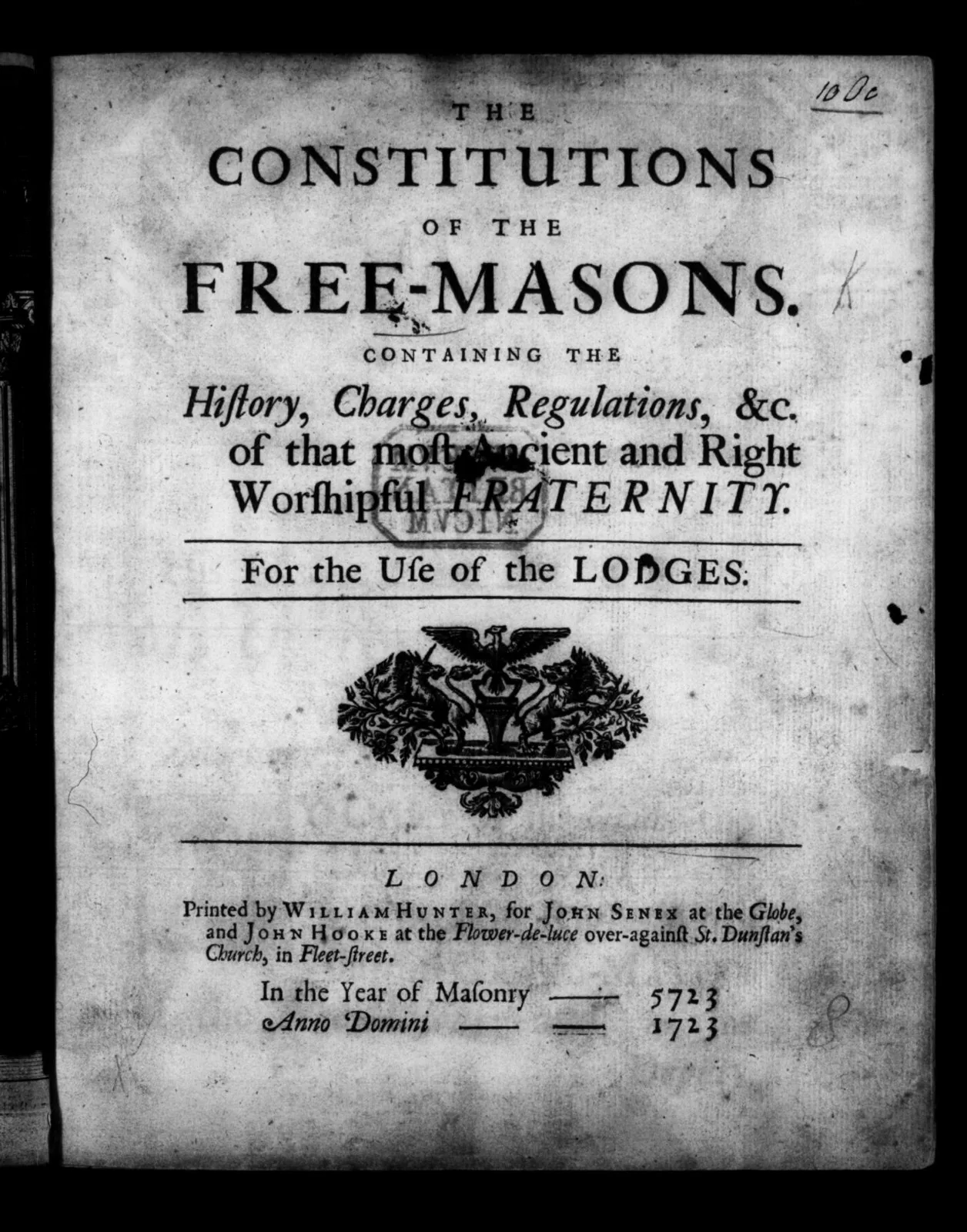
The most influential example appeared in the 1723 Constitutions of the Free-Masons, compiled by the Reverend James Anderson. Its historical account traced Masonry through biblical and universal history, connecting architecture and moral order to figures including Adam, Noah, Abraham and Solomon. Anderson was not writing a modern institutional history. He assembled a sacred and civic genealogy that placed Masonry within a providential account of civilisation.
Legend, symbolism and verifiable institutional continuity were not always separated as sharply as later historians would demand. Within much published Masonic writing, the educational and legitimising value of a narrative could matter more than its documentary foundation.
The growth of romantic origin theories
As the eighteenth century progressed, Masonic origin stories absorbed contemporary intellectual fashions. Some writers looked towards Egypt and the idea of preserved primordial wisdom. Others identified supposed connections with Pythagorean philosophy or the mystery religions of antiquity.
Romantic medievalism encouraged still more ambitious speculation. The crusading knight became a powerful cultural image, and the dramatic suppression of the medieval Knights Templar created precisely the historical rupture that invited imaginative reconstruction. Gaps in the record were used to propose that surviving Templars had preserved secret traditions which later resurfaced within Freemasonry.
By the early nineteenth century, several rites and systems claimed direct or symbolic Templar ancestry. These theories often reveal more about eighteenth- and nineteenth-century fascination with chivalry than about the historical origins of the Craft. That did not diminish their attraction. They linked modern fraternity to a prestigious, mysterious and emotionally compelling past.
Origin myths therefore functioned as more than attempted explanations. They expressed collective identity and offered continuity, purpose and distinction even where a documentary chain could not be shown.
The decisive Victorian change was not the loss of symbolism, but the refusal to treat symbolic importance as proof of institutional descent.
A Victorian crisis of historical confidence
During the nineteenth century, historical scholarship across Europe placed growing emphasis on documents, critical comparison and archival research. Universities professionalised the discipline, record societies published primary material and standards of evidence became more exacting. Freemasonry could not remain untouched by that environment.
Many Victorian Masonic writers were lawyers, soldiers, civil servants, clergy, businessmen and antiquaries familiar with systematic argument and the culture of learned societies. Some began applying comparable tests to the fraternity’s inherited narratives. If a direct ancient or Templar descent was claimed, what surviving evidence demonstrated it?
The pressure came from within as much as from external criticism. Traditional narratives retained symbolic value, but their literal historical foundations appeared increasingly fragile. The Templar hypothesis exposed the problem clearly: no convincing documentary chain bridged the centuries between the suppression of the medieval order and the appearance of organised speculative Masonry.
The historians called the Authentic School
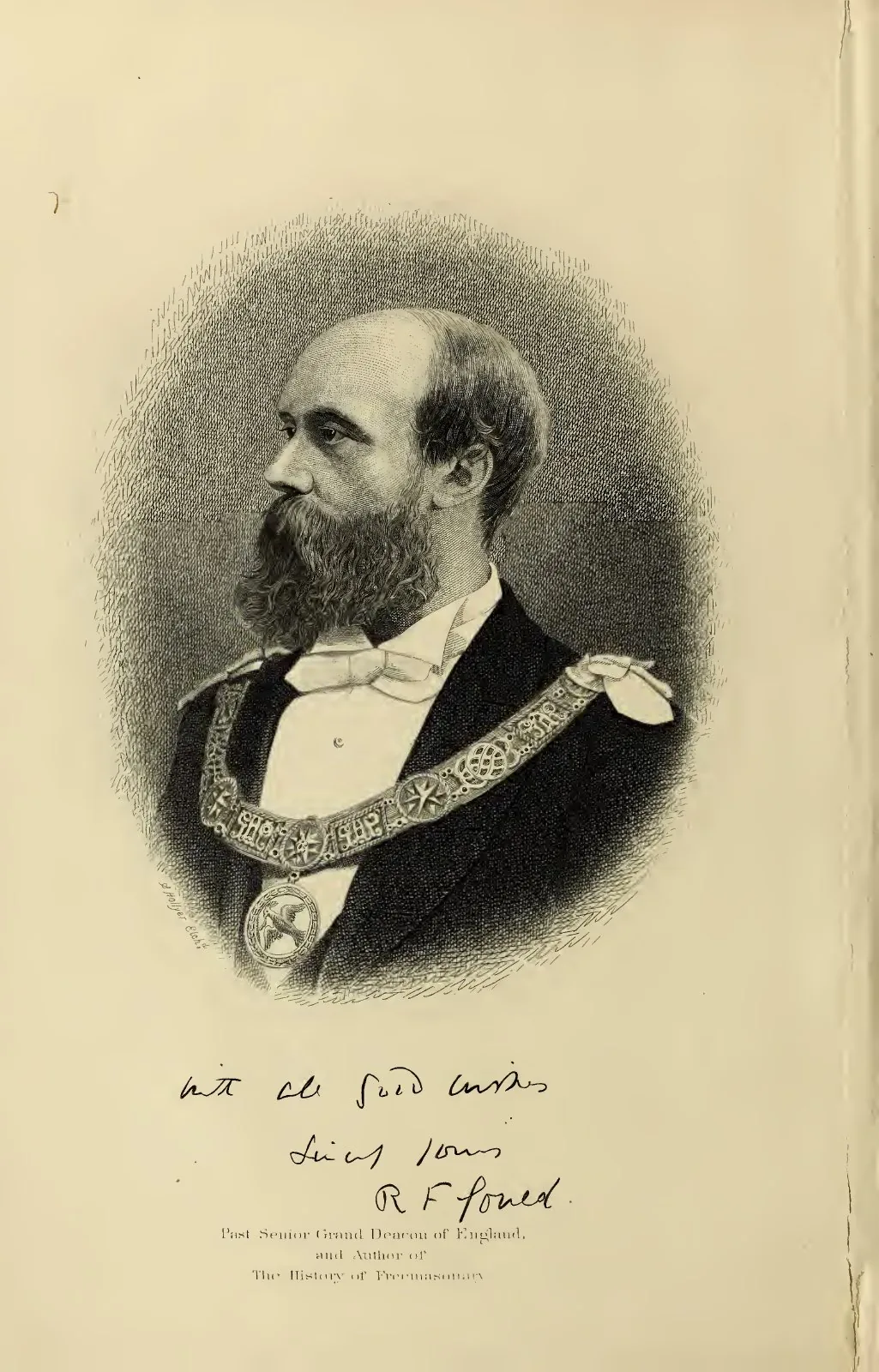
A group later associated with the “Authentic School” placed documentary evidence at the centre of Masonic history. Among its leading figures were Robert Freke Gould, William James Hughan, David Murray Lyon and George William Speth. They differed in method and interpretation, and the label can make a diverse network appear more unified than it was. What linked them was a determination to test claims against records.
They compared manuscripts, checked dates, traced institutional relationships and treated inherited assertions as questions rather than conclusions. This was not wholly unprecedented, nor did it instantly make Masonic history an academic profession. It nevertheless marked a major change in emphasis.
Once early lodge minutes, manuscript constitutions, printed regulations and administrative records were given priority, the surviving evidence directed attention towards operative stonemasonry, early lodges, sociability, ritual development and the institutions of seventeenth- and eighteenth-century Britain.
Quatuor Coronati and a new research culture
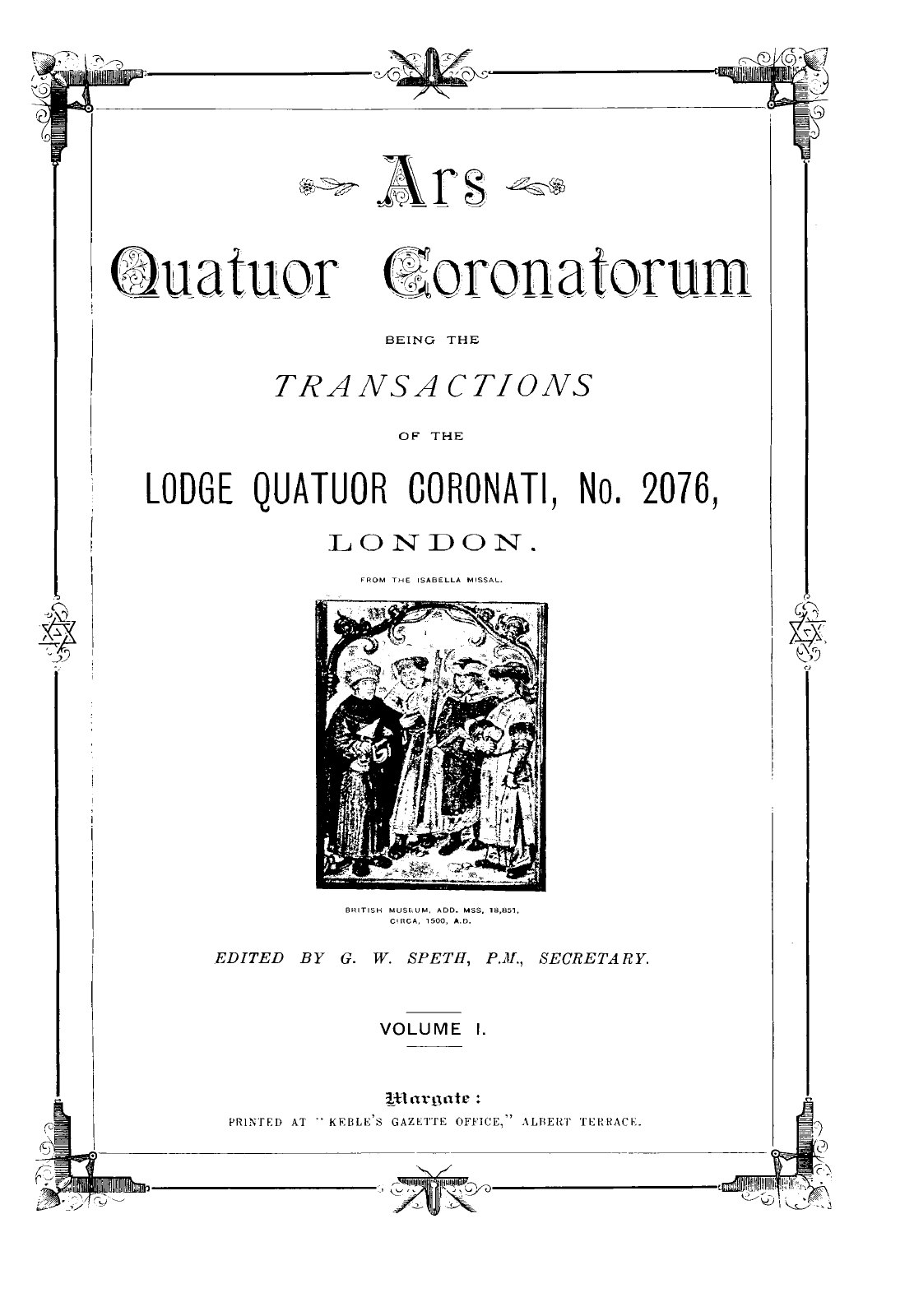
The warrant for Quatuor Coronati Lodge No. 2076 was issued on 28 November 1884. Its consecration was delayed until 12 January 1886, and the first volume of its transactions, Ars Quatuor Coronatorum, appeared in 1888. Those dates matter because “founded in 1884” can otherwise imply that all of its activity began at once.
The lodge created a durable forum for papers, documentary studies and informed debate. Its importance lay less in a single revolutionary discovery than in the research culture it fostered. Historical propositions were expected to meet evidence, criticism and discussion rather than circulate solely through repetition.
Questions changed accordingly. Instead of beginning with whether Freemasonry descended from an ancient mystery school or an outlawed military order, researchers increasingly asked what surviving records could establish. The field moved towards early lodge organisation, manuscript traditions, operative practice, ritual change and social history.
Later historians have broadened and revised the work of the early research lodge. Institutional documents do not tell every story, and the first generation carried assumptions of its own. Gender, class, empire, race, material culture and lived experience now receive attention that the Victorian pioneers did not consistently provide. Critical history continued by applying its methods to the Authentic School itself.
The discovery of a different past
The irony of Victorian Masonic scholarship is that abandoning remote antiquity revealed a past at least as interesting as the myths it displaced. Scottish lodge records proved especially important. They documented officers, regulations, customs and the admission of men who were not working stonemasons, allowing historians to examine change over time rather than assume an unexplained ancient survival.
Those records did not create a simple, uncontested story in which an operative trade smoothly became modern speculative Freemasonry. The relationship remains debated, and English, Scottish and Irish developments cannot be collapsed into a single line. They did, however, provide evidence for institutional continuities and transformations that could be studied directly.
Freemasonry increasingly appeared as the product of overlapping processes: craft organisation, sociability, intellectual culture, print, patronage, migration and institutional development. The explanation was more complex than a secret succession, but it was supported by records that other researchers could inspect and challenge.
Symbolism without literalism
The rejection of literal origin theories did not make Solomon’s Temple irrelevant to Freemasonry, nor did it strip Templar imagery of moral or spiritual significance. What critical historians challenged was the assumption that symbolic importance required direct institutional continuity.
This distinction allowed history and symbolism to do different work. The Temple could remain central to Masonic teaching without demanding an organisational chain from ancient builders to modern lodges. Chivalric imagery could communicate service, discipline and pilgrimage without proving descent from medieval crusaders.
Symbolic narratives can be interpreted, inhabited and valued as symbols. Historical claims require evidence appropriate to history. Confusing the two weakens both.
A concise chronology
- Anderson’s Constitutions
A legendary universal history places Masonry within a biblical and architectural genealogy.
- Romantic ancestries multiply
Egyptian, mystery-school, chivalric and Templar explanations flourish in changing rites and publications.
- David Murray Lyon publishes
His documentary history of the Lodge of Edinburgh uses Scottish lodge records to illuminate early practice.
- Gould’s history appears
Robert Freke Gould’s multi-volume work brings extensive comparative documentation to a wide readership.
- Quatuor Coronati warranted
UGLE issues the warrant for Lodge No. 2076 on 28 November.
- The research lodge is consecrated
Quatuor Coronati begins formal work on 12 January.
- First volume of AQC
Ars Quatuor Coronatorum establishes a continuing vehicle for evidence-led papers and debate.
- The method keeps widening
Archival work now sits beside social, cultural, global and material approaches to Masonic history.
Conclusion
The Victorian transformation of Masonic historiography altered the basis on which the fraternity wrote about its past. Scholars associated with the Authentic School challenged cherished theories by insisting that historical propositions should answer to surviving evidence.
The importance of the change extends beyond accuracy. It reflected a broader rethinking of evidence, authority and tradition. Freemasonry emerged with a more critical account of its documented development without having to abandon the symbolic narratives central to its teaching.
That is the paradox at the heart of the story. Victorian historians strengthened Masonic history by undermining some of its grandest claims. Once the fraternity no longer required literal descent from Egyptian priests, medieval Templars or the builders of Solomon’s Temple, its significance could be sought in its actual history, symbolic richness and continuing capacity for fellowship and moral reflection.
Their greatest achievement was therefore not a final answer to where Freemasonry came from. It was the recognition that the value of Freemasonry does not depend upon an invented antiquity.