The modern landscape is less a story of orders breaking away from one original organisation than a gradual process of definition, preservation and specialisation.
Introduction
The structure of Freemasonry in England and Wales can be confusing to anyone approaching it for the first time. There is the Craft, governed by the United Grand Lodge of England. There is the Royal Arch, closely linked to the Craft but governed by Supreme Grand Chapter. There are the Mark, Royal Ark Mariner, Knights Templar, Royal and Select Masters, Allied Masonic Degrees, the Order of the Secret Monitor and several other companion orders, many administered from Mark Masons’ Hall. Then there are Christian, chivalric, Rosicrucian and esoteric orders governed by their own sovereign bodies.
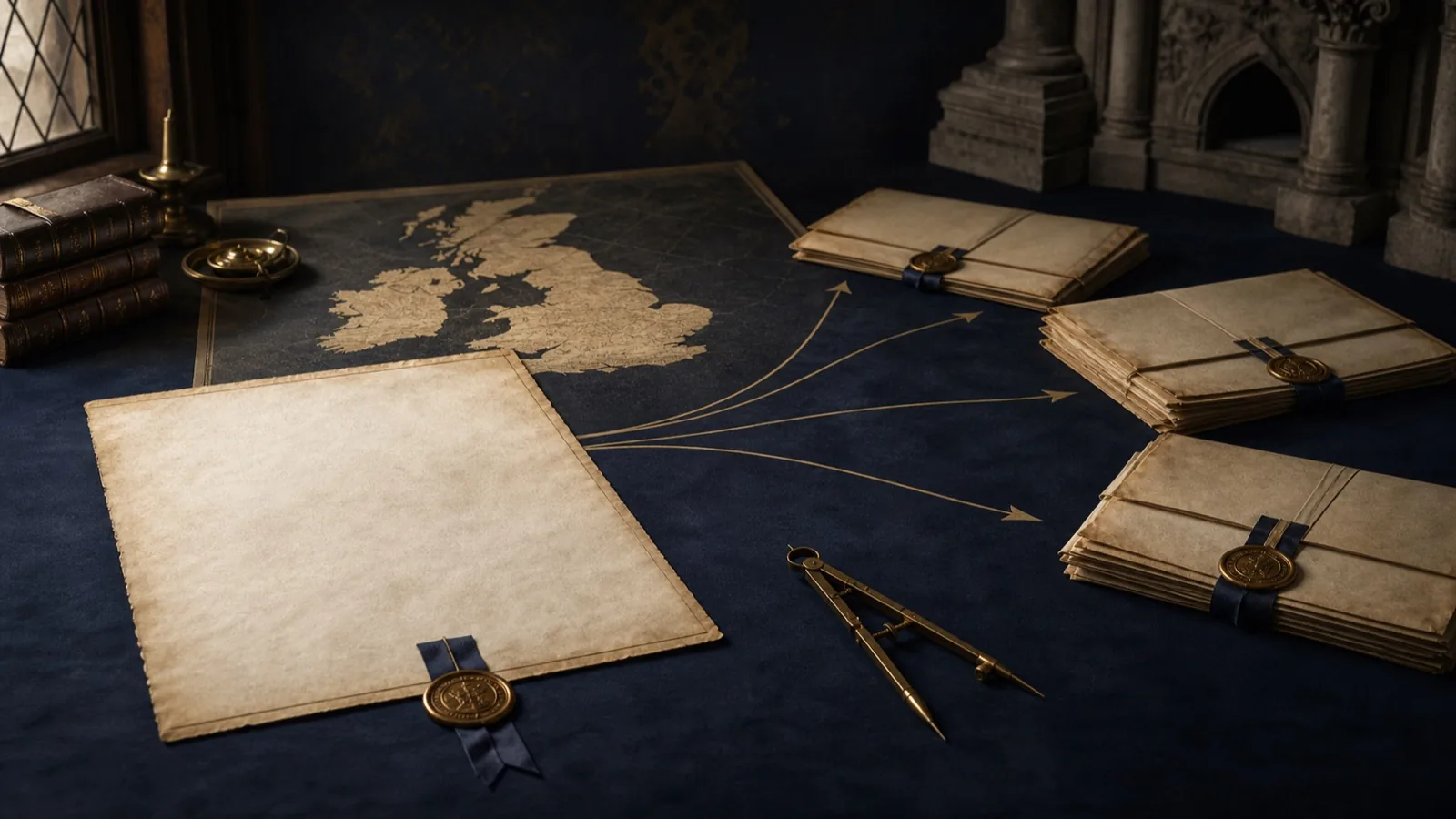
It is tempting to imagine that all of these bodies “splintered” from one original organisation. That is not quite accurate. The history is less a story of rebellion and more a story of definition. In the eighteenth century, Freemasonry was much less tidy than it is today. Lodges and chapters worked a variety of ceremonies, degrees and traditions. Some were local, some were imported from Ireland, Scotland, France or America, and some developed within England itself. Over time, as Grand Lodge authority became more formal and constitutional, the Craft narrowed its official definition, while other ceremonies were gathered into separate orders with their own rulers, constitutions and administrative centres.
The result is the modern English and Welsh Masonic landscape: one central Craft authority, a closely connected Royal Arch, and a constellation of additional orders which are Masonic in character but not part of Craft Masonry itself.
The early problem: Freemasonry was not originally neatly divided
In the eighteenth century, English Freemasonry did not begin with the tidy structure familiar today. The Premier Grand Lodge of England was formed in 1717, but early lodges were not always uniform in ritual, practice or degree structure. The familiar three-degree system of Entered Apprentice, Fellow Craft and Master Mason became established over time rather than appearing fully formed at the beginning.
Alongside the Craft degrees, many other ceremonies circulated among Masons. Some were worked in lodges, some in chapters, and some in more informal bodies. These included the Royal Arch, Mark, Knight Templar ceremonies, Red Cross degrees and many other rites which later became separate orders.
This early fluidity is essential to understanding the later separation of orders. The question was not originally, “Why did these orders leave Grand Lodge?” Rather, the question became, “Which ceremonies properly belong to the Craft, and which should be governed elsewhere?”
The Antients and the Moderns
A major turning point came with the rivalry between the two English Grand Lodges of the eighteenth century.
The original Grand Lodge, founded in 1717, later became known as the “Moderns”. In 1751, a rival body emerged, known as the “Antients”. The Antients accused the Moderns of altering ancient practices and claimed to preserve older forms of Masonry.
One of the most important differences between them concerned the Royal Arch. The Antients regarded the Royal Arch as an essential part of Masonry. Their lodges and chapters gave it a prominent place. The Moderns were more cautious and did not initially integrate it in the same way.
The Antients also tended to be more accepting of additional degrees being worked under lodge authority. This helped create an environment in which ceremonies such as the Mark and other additional degrees could flourish.
This period explains why later English Masonry had to make constitutional decisions. By the early nineteenth century, there was a need to unite the two rival Grand Lodges and define what English Freemasonry officially consisted of.
The Union of 1813 and “Pure Antient Masonry”
In 1813, the Antients and Moderns united to form the United Grand Lodge of England. This Union was one of the most important moments in the history of English Freemasonry.
The Act of Union defined “Pure Antient Masonry” as consisting of three degrees and the Holy Royal Arch. This settlement was a compromise. It preserved the Craft as three degrees while also acknowledging the special place of the Royal Arch.
This decision shaped everything that followed.
The Royal Arch was not treated as merely one optional side order among many. It was given a unique constitutional status as the completion of Pure Antient Masonry. However, other ceremonies, including the Mark degree, were not included in the formal definition.
This did not mean those other ceremonies disappeared. It meant they would eventually need their own governing structures if they were to survive and grow in an orderly way.
The Royal Arch: separate but closely joined
The Royal Arch occupies a unique position in England and Wales.
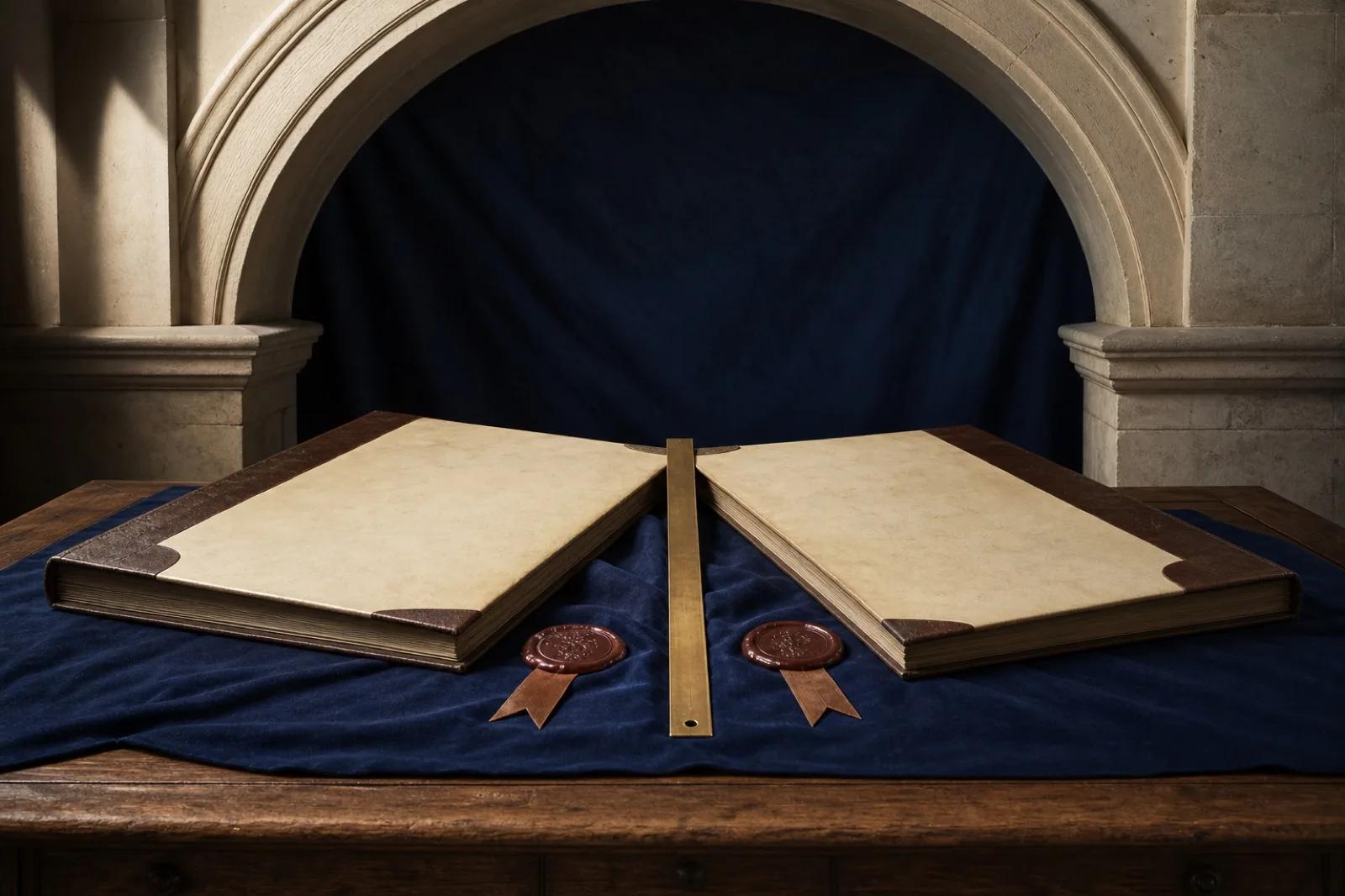
It is not administered as a normal degree within a Craft lodge, but it is historically and constitutionally linked to the Craft. Its governing body is the Supreme Grand Chapter of Royal Arch Masons of England. Although separate in structure, Supreme Grand Chapter is closely connected with UGLE. Senior Craft rulers often hold equivalent offices in Supreme Grand Chapter, and both bodies are based at Freemasons’ Hall in London.
This makes the Royal Arch different from the Mark, Knights Templar, Rose Croix or other companion orders. It is not simply “another order”. In the English system, it is the recognised completion of the journey begun in the Craft.
That said, the Royal Arch’s separate administration reflects the general pattern that emerged after 1813. The Craft would remain constitutionally focused on the three degrees, while additional ceremonies would be governed through separate bodies.
Why the Mark was not included
The Mark degree is one of the most important examples of a ceremony that had ancient roots and wide popularity but did not become part of the Craft under UGLE.
The Mark degree had been worked in England before the formation of the Grand Lodge of Mark Master Masons. The earliest English records are associated with the Chapter of Friendship in Portsmouth in 1769. The degree draws on the symbolism of operative stonemasons’ marks and, in English practice, is conferred on Master Masons by “advancement”.
In chronological symbolism, the Mark is often placed after the Fellow Craft degree and before the Master Mason degree. This made it feel, to many Masons, like a natural part of the Craft story. In Scotland, the Mark developed in a different constitutional position and is more closely linked to Craft and Royal Arch practice.
In England, however, the 1813 settlement did not include the Mark within Pure Antient Masonry. This created a long-term problem. The degree was valued, but it had no settled place under UGLE.
The formation of the Grand Lodge of Mark Master Masons
The solution came in 1856, when the Grand Lodge of Mark Master Masons of England and Wales was formed. Its first meeting was held on 23 June 1856.
This was not a simple act of rebellion against UGLE. It was the creation of a separate governing body for a ceremony that many Masons believed deserved proper recognition and regulation.
The Mark developed into one of the largest and most significant companion orders in England and Wales. It became especially important because other orders later used Mark membership as a qualification. The Royal Ark Mariner, for example, is open to Mark Master Masons, and several other orders require candidates to be both Mark and Royal Arch Masons.
The formation of Mark Grand Lodge was therefore a major moment in the separation of English Masonic orders. It established the principle that important additional degrees could exist outside UGLE while remaining part of the wider Masonic family.
The Royal Ark Mariner and its attachment to the Mark
The Royal Ark Mariner has a different character from the Mark, but it became closely attached to it.
The order centres on the story of Noah, the Ark and the Flood. Its lodges are traditionally “moored” to Mark lodges and take the same number. Since 1871, the Royal Ark Mariner has been under the jurisdiction of the Grand Lodge of Mark Master Masons, and the Grand Master of the Mark is also Grand Master of the Royal Ark Mariners.
This is an important example of administrative consolidation. The Royal Ark Mariner did not simply grow as an entirely independent structure. It became linked to the Mark and was stabilised under Mark authority.
In practical terms, this helped create one of the earliest building blocks of what would later become the Mark Masons’ Hall family of orders.
Chivalric Masonry and the Knights Templar
The Knights Templar order in English Freemasonry followed a different path.
Masonic Templar ceremonies appeared in England in the eighteenth century. The earliest modern Masonic Knight Templar activity in England is associated with the Chapter of Friendship in Portsmouth in 1778. In 1791, a Grand Conclave was formed under Thomas Dunckerley.
By 1873, the terminology had changed: Grand Conclave became Great Priory, and Encampments became Preceptories.
Unlike the Craft or Mark, the Knights Templar became explicitly Christian in character. In England and Wales, candidates must be Master Masons, Royal Arch Masons and profess belief in the Trinitarian Christian faith.
This shows another reason for separation. Some orders developed religious or chivalric qualifications that would not fit within the broad religious basis of Craft Masonry. UGLE requires belief in a Supreme Being but does not require Trinitarian Christianity. Therefore, orders such as Knights Templar had to remain constitutionally separate.
The Ancient and Accepted Rite
The Ancient and Accepted Rite, often known through the Rose Croix degree, also developed separately.
In England and Wales, the Rite is governed by the Supreme Council 33°. Its most commonly experienced working degree is the 18th Degree, the Rose Croix of Heredom. It is a Christian order and has its own structure, hierarchy and ritual system.
The Ancient and Accepted Rite did not become part of UGLE because it operates as a separate rite with its own sequence of degrees, symbolism and religious qualification. It belongs to the wider family of Masonic orders but is not Craft Masonry.
This is another example of a repeated pattern: once UGLE had defined the Craft and Royal Arch settlement, other rites either had to disappear or be governed by their own sovereign bodies.
Royal and Select Masters
The Royal and Select Masters, sometimes called the Cryptic Degrees, entered English organisation through American influence.
The Grand Council of Royal and Select Masters of England and Wales was formally constituted in 1873 by four councils that had been chartered by the Grand Council of New York. The order requires candidates to be Master Masons, Mark Master Masons and Royal Arch Masons.
This order fills in parts of the legendary and symbolic story connected with the building of King Solomon’s Temple. Its degrees sit naturally alongside the Mark and Royal Arch, which explains the membership requirements.
Its development shows that the separation of English Masonic orders was not only caused by internal English disagreements. Some orders arrived from overseas, particularly from America, and were then naturalised into the English system under their own governing bodies.
Allied Masonic Degrees
The Allied Masonic Degrees provide perhaps the clearest example of administrative tidying-up.
In the early nineteenth century, many additional degrees were being worked in different places. Some had no obvious home. They were not Craft, not Royal Arch, not Mark, not Templar, and not part of the Ancient and Accepted Rite.
By the late nineteenth century, it became necessary to preserve and regulate these otherwise scattered ceremonies. The Allied Masonic Degrees gathered several such degrees into one order. Today, in England and Wales, the order includes degrees such as St Lawrence the Martyr, Knight of Constantinople, Grand Tilers of Solomon, Red Cross of Babylon and Grand High Priest.
This was not so much a splinter as a rescue operation. Degrees that might otherwise have vanished were placed under a single Grand Council.
The Order of the Secret Monitor
The Order of the Secret Monitor, or Brotherhood of David and Jonathan, is another example of a ceremony with a separate origin and later English organisation.
Its themes centre on friendship, brotherly care and the biblical relationship between David and Jonathan. The order was known in Scotland by around 1790 and in the United States by the 1820s. It was brought to England in the later nineteenth century, and a Grand Council was formed in 1887.
The qualification is that of being a Master Mason in good standing. The order is now administered from Mark Masons’ Hall.
Again, this was not a degree that “broke away” from UGLE. It had its own character and entered the English Masonic landscape as a companion order.
Red Cross of Constantine
The Red Cross of Constantine is another important Christian Masonic order.
The present order was firmly re-established by Robert Wentworth Little in 1865, although earlier Red Cross bodies had existed before then. It consists of three main degrees: Knight, Priest-Mason and Prince-Mason.
Its Christian and chivalric nature meant that it could not be absorbed into the Craft structure. Like the Knights Templar and Ancient and Accepted Rite, it required its own governing authority.
The role of Robert Wentworth Little is important because he was involved in several nineteenth-century Masonic and esoteric developments. The mid-Victorian period was a time when many older, obscure or irregularly worked ceremonies were reorganised into more stable institutions.
The Societas Rosicruciana in Anglia
The Societas Rosicruciana in Anglia, or SRIA, occupies a slightly different category.
It is not a Craft body and is not governed by UGLE, though its members must be Master Masons. It was founded in 1867 and developed as a Rosicrucian and esoteric Christian society for Freemasons.
The SRIA is not simply another degree system extending the Craft. It is a study-based initiatic society, organised into grades, with an emphasis on Rosicrucian symbolism, Christian mysticism, philosophy, science and the hidden mysteries of nature.
Its separation from UGLE is therefore natural. It is Masonic in membership qualification and culture, but it is not Craft Masonry and not a Grand Lodge system.
Mark Masons’ Hall as an administrative centre
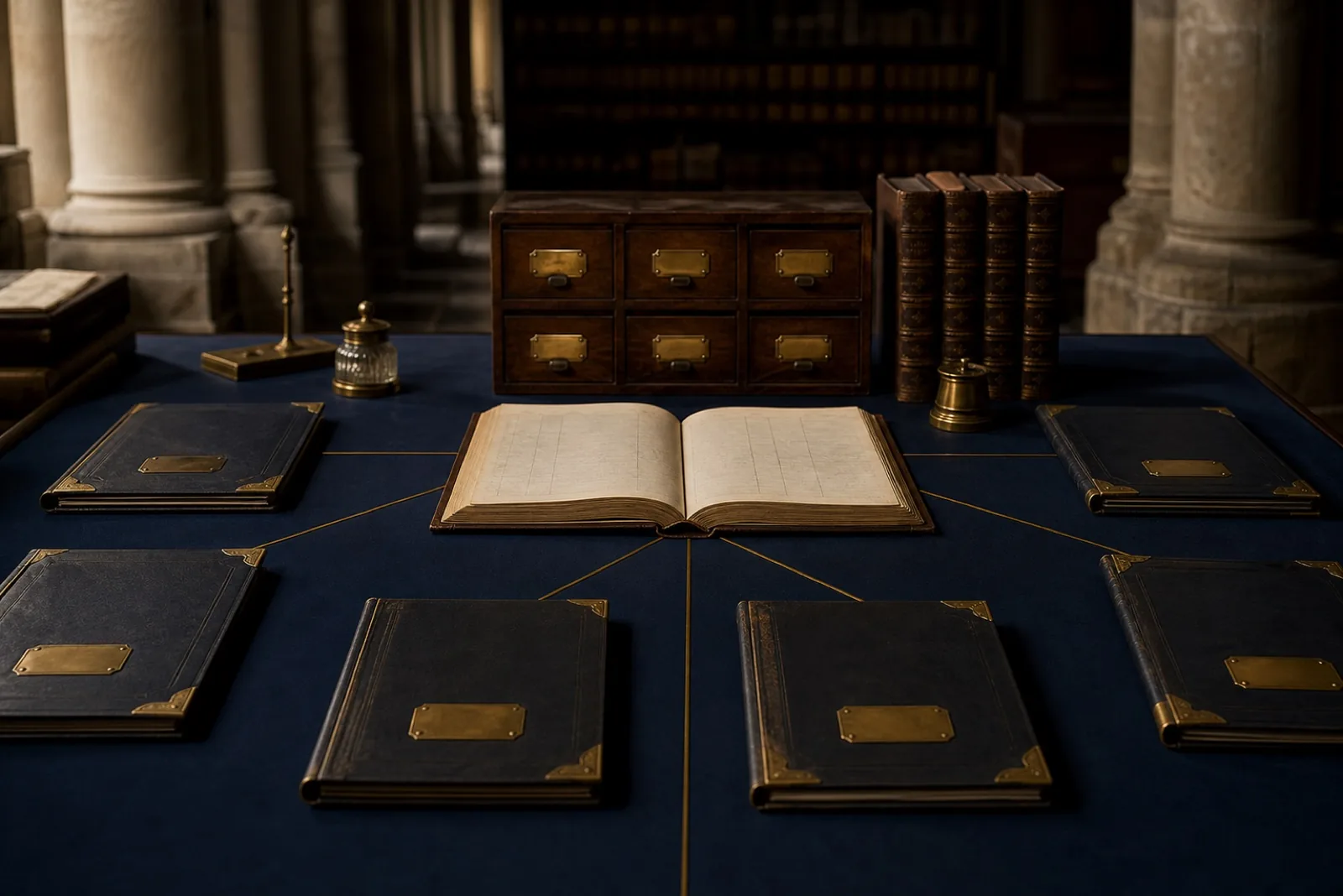
Mark Masons’ Hall in St James’s Street, London, is now the administrative home for several important companion orders. These include Mark Master Masons, Royal Ark Mariner, Knights Templar, Knights of Malta, Red Cross of Constantine, Royal and Select Masters, Allied Masonic Degrees, Order of the Secret Monitor, Scarlet Cord and Knights Beneficent of the Holy City.
This can make it appear as though all these orders are “Mark orders”. Strictly speaking, that is not correct. Mark Masons’ Hall administers them, but each order has its own identity, rulers, qualifications, ritual and history.
The administrative arrangement provides efficiency, shared resources and a central home. It does not mean that the Knights Templar, Red Cross of Constantine or Secret Monitor are degrees of Mark Masonry.
This distinction matters. Mark Masons’ Hall is both the headquarters of Mark Masonry and the administrative centre for several companion orders.
Why so many separate orders exist
The separation of Masonic orders in England and Wales happened for several reasons.
First, the 1813 Union defined the Craft narrowly. Once Pure Antient Masonry was defined as the three Craft degrees and the Royal Arch, other ceremonies had to find homes elsewhere.
Second, different degrees had different themes. Some were Craft-related, some were Solomonic, some were chivalric, some were Christian, some were Rosicrucian, and some were philosophical or commemorative.
Third, many orders had different membership qualifications. UGLE could not absorb explicitly Christian orders without changing the inclusive religious basis of Craft Masonry.
Fourth, some orders arrived from abroad or were revived from older sources. They needed their own constitutions and ruling bodies.
Fifth, the Victorian period had a strong appetite for organisation. The nineteenth century saw many societies, clubs, institutions and orders formalised. Freemasonry followed the same pattern.
“Splintering” is often the wrong model. Specialisation, preservation and separate governance tell the history more accurately.
Splintering or specialisation?
The word “splinter” should be used carefully.
Some Masonic bodies did emerge because a degree was not accepted into the Craft structure. The Mark is the clearest example. However, many other orders did not splinter from UGLE in a hostile sense. They developed separately, were imported, revived, reorganised or gathered together for preservation.
A better word is “specialisation”.
UGLE governs the Craft. Supreme Grand Chapter governs the Royal Arch. Mark Grand Lodge governs the Mark and Royal Ark Mariner. Other sovereign bodies govern Christian, chivalric, cryptic, Rosicrucian or allied degrees.
This system allows each order to preserve its own character while remaining connected through shared Masonic membership.
The modern landscape
Today, Freemasonry in England and Wales is best understood as a family of related but distinct orders.
The Craft is the foundation. The Royal Arch completes Pure Antient Masonry. The Mark develops an important symbolic episode connected with the building of the Temple. The Royal Ark Mariner offers a separate Noahic tradition. Royal and Select Masters expands the Solomonic story. Knights Templar, Malta, Rose Croix and Red Cross of Constantine provide Christian and chivalric paths. The SRIA offers Rosicrucian study. The Allied Masonic Degrees preserve smaller but fascinating ceremonies.
These orders are separate because history made them so. But separation does not necessarily mean division. In many cases, it has allowed the orders to survive, flourish and maintain their distinctive teachings.
A concise chronology
- Premier Grand Lodge
The first Grand Lodge is formed in London; uniform three-degree practice develops over time.
- The Antients emerge
A rival Grand Lodge gives the Royal Arch and additional ceremonies a prominent place.
- Union and definition
The Antients and Moderns unite, defining Pure Antient Masonry around the three degrees and Royal Arch.
- Mark Grand Lodge
A separate Grand Lodge gives Mark Masonry a settled constitutional home.
- Victorian reorganisation
Red Cross of Constantine and SRIA take durable institutional forms.
- Further systems formalise
Royal and Select Masters is constituted in England and Templar terminology changes to Great Priory and Preceptories.
- Secret Monitor Grand Council
The order receives an organised English governing structure.
- Related, distinct orders
Shared qualifications connect bodies that retain separate rulers, constitutions and purposes.
Conclusion
The separation of Masonic orders in England and Wales was not a single event. It was a gradual process shaped by the early diversity of Masonic practice, the rivalry of the Antients and Moderns, the Union of 1813, and the organisational energy of the nineteenth century.
UGLE emerged as the authority for Craft Masonry. The Royal Arch retained a special constitutional place as part of Pure Antient Masonry. The Mark, excluded from that settlement, formed its own Grand Lodge in 1856. Other ceremonies and rites developed separate governing bodies because their symbolism, qualifications or origins placed them outside the Craft.
Mark Masons’ Hall later became a central administrative home for many companion orders, but those orders remain distinct in identity and governance.
The result is a rich and layered Masonic ecosystem. Rather than seeing the orders as fragments of a broken whole, it is better to see them as specialised branches of a wider tradition. Each preserves a different aspect of Masonic symbolism, history and spiritual reflection.
For the Mason who chooses to explore beyond the Craft, this history explains why the journey does not simply proceed through one single ladder. Instead, English and Welsh Freemasonry offers a series of related paths, each with its own origin, purpose and place in the wider Masonic story.