
The history of American Freemasonry touches the history of the nation, but the two should not be confused. Freemasons participated in public life on opposing sides of great political conflicts; the fraternity was neither the hidden author of the Revolution nor a single national organisation.
Freemasonry reaches colonial America
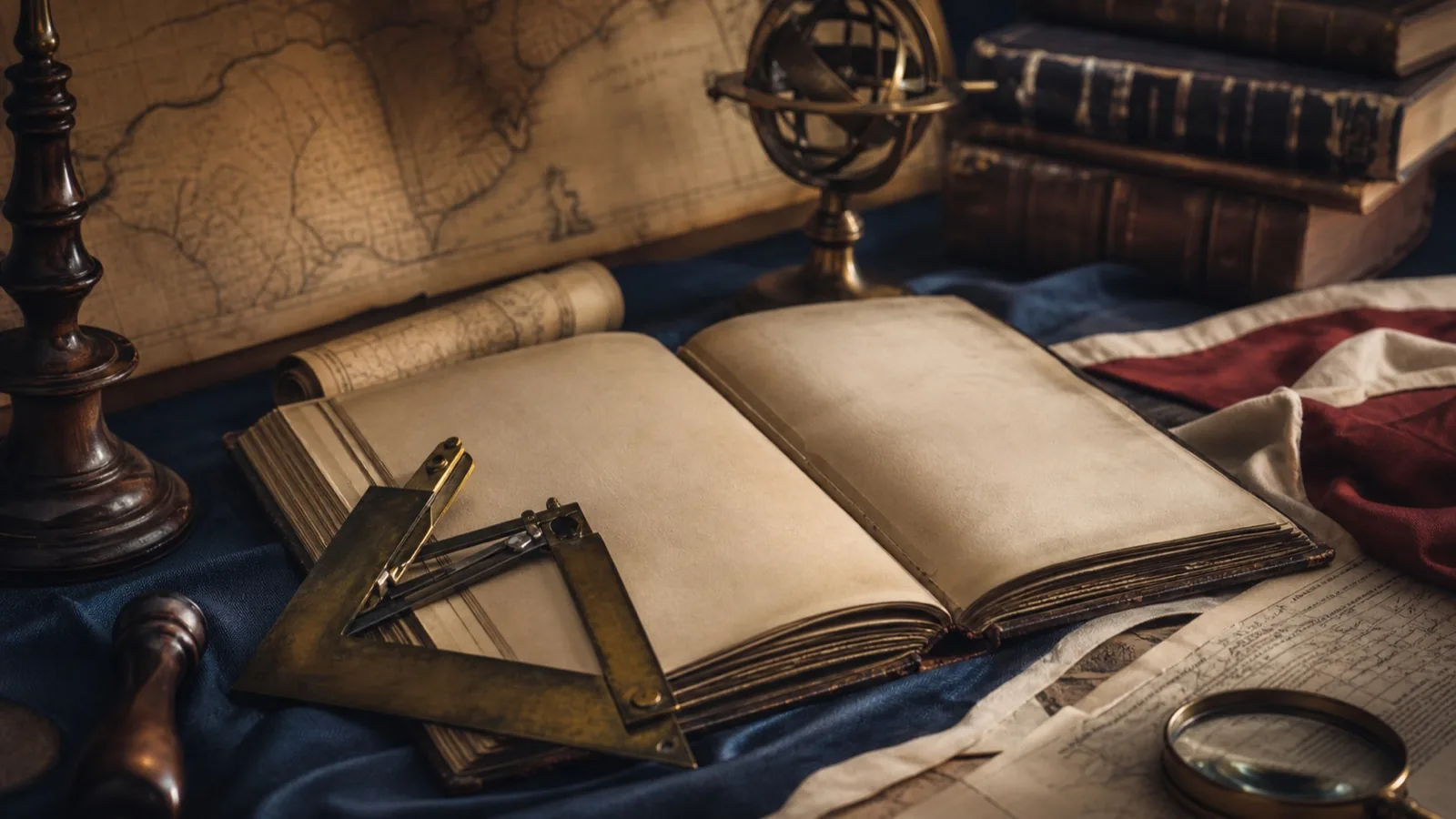
Organised Freemasonry crossed the Atlantic in the early eighteenth century, following the growth of Grand Lodge Masonry in Britain and Ireland. Surviving newspaper notices, lodge records and warrants show Masonic activity in the colonies by the 1730s, although claims about a single “first” American lodge depend upon what evidence and definition are used.
Boston and Philadelphia became important early centres. St John’s Grand Lodge in Massachusetts dates its formal authority from Henry Price’s commission in 1733, while Philadelphia’s early Masonic community included Benjamin Franklin. Other lodges developed under English, Scottish and Irish authority, and travelling military lodges helped carry the institution between ports, garrisons and settlements.
These lodges offered fellowship, charitable support and moral instruction. They also brought merchants, artisans, military officers and civic figures into an association that spoke of equality within the lodge, even though colonial society outside it remained sharply unequal.
Benjamin Franklin and the printed Craft
Benjamin Franklin was initiated in Philadelphia in 1731 and soon became one of colonial Masonry’s best-known figures. In 1734 he printed an American edition of James Anderson’s Constitutions of the Free-Masons. It was the first Masonic book printed in America and helped place the fraternity’s rules and legendary history into colonial circulation.
Franklin held senior Masonic office in Pennsylvania and encountered Freemasonry again during his diplomatic years in France. His Masonic career fits a broader pattern in his life: voluntary association, inquiry, self-improvement and practical civic service. It is tempting to turn Franklin into evidence of a unified Masonic political programme, but his membership demonstrates influence and connection rather than institutional control of colonial politics.
Revolution: connection without conspiracy
Several prominent supporters of American independence were Freemasons, including George Washington, Benjamin Franklin, Paul Revere, Joseph Warren and the Marquis de Lafayette. Loyalists and British officers were Freemasons too. Lodges did not collectively direct the Revolution, and no sound history requires a secret Masonic command behind events.
Masonic language about virtue, liberty and fraternity did overlap with the moral vocabulary of the Enlightenment and the revolutionary age. Individual relationships formed in lodges could matter, particularly among officers and civic leaders. That is different from saying the fraternity acted as a revolutionary organisation.
Joseph Warren, a physician, patriot leader and senior Massachusetts Mason, died at Bunker Hill in 1775. Paul Revere later became Grand Master of the Grand Lodge of Massachusetts in 1795; he was not Warren’s immediate successor, as compressed retellings sometimes suggest. Their careers nevertheless show how closely public service and Masonic leadership could sit within the same lives.
American Freemasonry was present in the Revolution, but it was not the Revolution’s secret headquarters.
George Washington and a public Masonic identity
George Washington was initiated at Fredericksburg, Virginia, in 1752 and completed the three Craft degrees by 1753. His surviving correspondence and participation in ceremonies show a durable Masonic identity, though lodge membership was only one part of his public life.
The most celebrated episode came on 18 September 1793, when Washington took part in the ceremony for laying the cornerstone of the United States Capitol. The event joined federal civic symbolism with a recognisably Masonic public ceremony. It later became central to the visual memory of American Freemasonry.
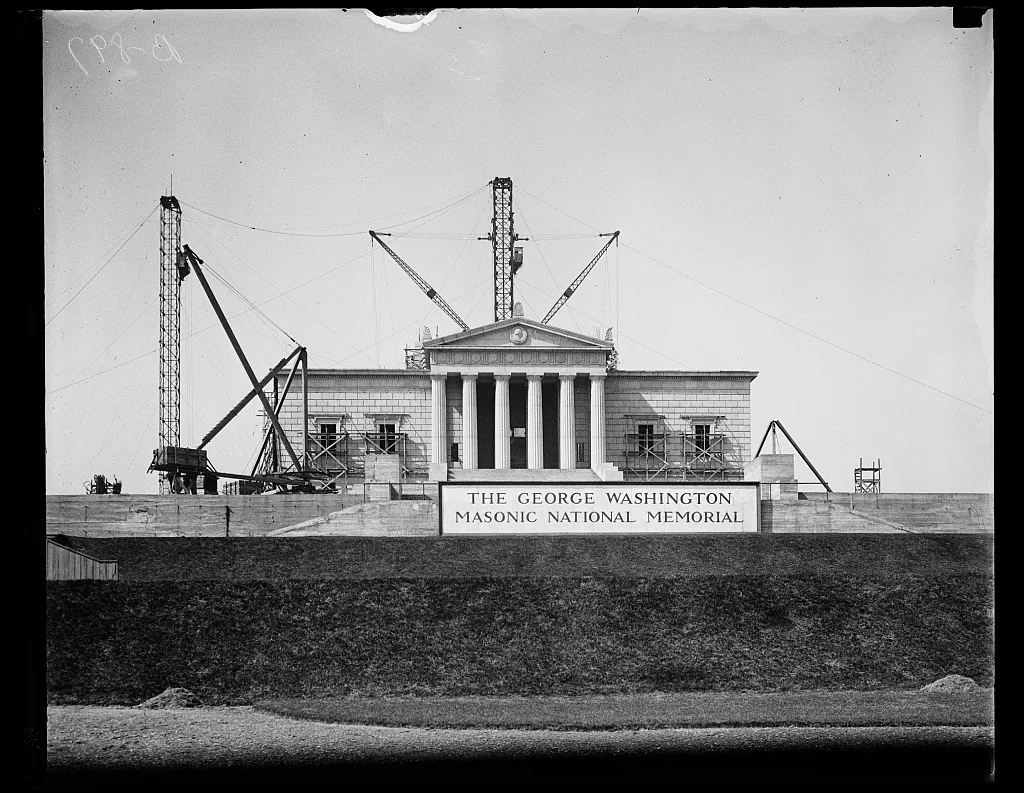
Washington’s reputation gave the fraternity considerable cultural prestige in the early republic. That association is preserved at the George Washington Masonic National Memorial in Alexandria, Virginia, while Mount Vernon’s collections and scholarship document the objects and records behind his Masonic life.
A federation of sovereign jurisdictions
Independence weakened the logic of permanent government from London, Edinburgh or Dublin. State Grand Lodges emerged as sovereign bodies, often through processes that began during the Revolution and continued afterwards. The United States did not create one national Grand Lodge.
That decentralised structure remains fundamental. A mainstream Grand Lodge usually governs Craft lodges within its state, establishes its own law and decides which other Grand Lodges it recognises. Broad similarities therefore coexist with genuine differences in ritual practice, terminology, policy and relationships with appendant bodies.
Any description of “American Freemasonry” is consequently a summary, not a single rulebook. Joining requirements and recognition must be checked with the relevant state jurisdiction.
Expansion across the early republic
As settlement moved westward, lodges appeared in new towns and territories. A lodge could provide mutual aid, organise charity, stage public ceremonies and connect people who had arrived from different regions. In places with few stable civic institutions, the lodge hall became a visible part of community life.
Growth also expanded the range of American Masonic organisations. Royal Arch chapters, Knights Templar commanderies and versions of the Ancient and Accepted Scottish Rite developed alongside Craft Masonry. These bodies did not form a single ladder of authority above the lodge; they were separately governed routes with their own histories.
The Morgan affair and political anti-Masonry
American Freemasonry’s gravest public crisis began in 1826. William Morgan, who was associated with Masonry in western New York and planned to publish an exposure, disappeared after being abducted. His fate was never conclusively established. The belief that Masons had murdered him, followed by allegations of obstruction and preferential treatment, created a national scandal.
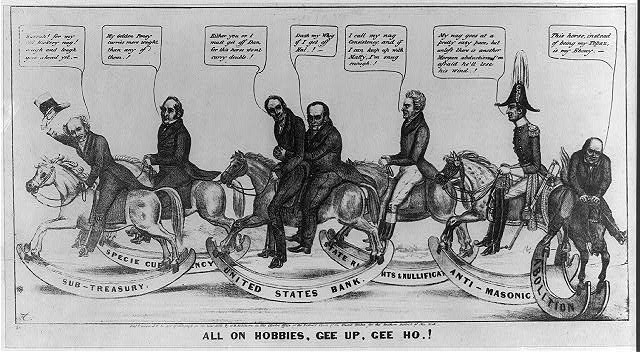
The reaction was larger than criticism of secrecy. Anti-Masonry became a religious, social and political movement. The Anti-Masonic Party, organised in New York and then nationally, was the first American third party to hold a national nominating convention. It challenged candidates thought to place fraternal obligation above public duty.
Membership and lodge activity fell severely in many states. The scale varied by region, but the episode demonstrated that a fraternity associated with civic respectability could quickly become a symbol of unaccountable power. By the 1840s the political movement had declined, while Masonic organisations began a gradual recovery.
Prince Hall Freemasonry
Prince Hall Freemasonry is essential to any honest account of the American Craft. Prince Hall and fourteen other Black men were initiated in 1775 by members of a British military lodge in Boston. Excluded from the established white lodges, they later obtained a charter from the Premier Grand Lodge of England for African Lodge No. 459, issued in 1784.
From that foundation grew a distinct network of Black Grand Lodges. It offered fraternity, education, mutual support and organised leadership in communities living under slavery, exclusion and racial violence. Prince Hall Masons became prominent in campaigns for abolition, civil rights and community advancement.
For generations, many mainstream state Grand Lodges withheld recognition from their Prince Hall counterparts. Recognition has expanded markedly since the late twentieth century, but the exact position remains jurisdiction-specific. It is therefore more accurate to describe an evolving landscape than to imply that one nationwide settlement occurred at a single moment.
War, reunion and remembered brotherhood
Freemasons served in Union and Confederate forces during the Civil War. Lodges were disrupted, buildings were lost and members faced one another across battle lines. Accounts of Masons giving aid to enemies became part of the fraternity’s memory of the conflict.
Some such stories are well documented; others accumulated detail through repetition. The careful historical point is not that Masonic recognition routinely overrode military duty, but that a shared fraternal language sometimes supported acts of burial, assistance or mercy. After the war, lodges could also provide a setting for local reunion, even as the nation’s political and racial conflicts remained unresolved.
From fraternal expansion to mass membership
Between the late nineteenth and mid-twentieth centuries, Freemasonry became one part of a much wider American culture of voluntary associations. Imposing temples appeared in large cities, while modest lodge halls served smaller communities. The York Rite, Scottish Rite and Shriners grew, and organisations connected with Masonic families and youth developed their own identities.
Shriners International was founded in 1872. Its best-known philanthropic work began with the first Shriners hospital in 1922 and developed into a specialist paediatric healthcare system. Other Masonic charities have supported homes, scholarships, research, disaster relief and local needs, although the scale and form differ widely between jurisdictions.
American Masonic membership reached its numerical high point in the late 1950s, exceeding four million members in commonly cited jurisdictional statistics. The post-war surge reflected population growth and a broad enthusiasm for clubs, churches, veterans’ groups and civic organisations. Large classes and ambitious buildings belonged to that particular social moment; they were not the timeless norm.
Decline, consolidation and adaptation
Membership declined from the 1960s onwards. Freemasonry shared this experience with many membership-based institutions. Suburbanisation, increased mobility, changing work and family patterns, new forms of leisure, and a broader retreat from formal voluntary associations all played a part.
Falling numbers created practical pressures. Lodges merged, sold buildings and reconsidered programmes designed for a mass-membership era. Statistics alone, however, do not describe the quality of local life. Some lodges struggled; others renewed their focus on education, ritual, fellowship, heritage and visible community service.
Modern American Freemasonry now numbers in the hundreds of thousands rather than the millions of its peak. Because there is no single national Grand Lodge and statistical series differ in coverage, precise totals should be read with care.
The twenty-first-century fraternity
Today the American Masonic landscape remains decentralised and varied. State Grand Lodges, Prince Hall jurisdictions, appendant bodies, research organisations and local lodges maintain distinct programmes. Digital communication has made public education easier, while also allowing mythology and inaccurate claims to circulate rapidly.
Younger petitioners often describe an interest in community, tradition, philosophical reflection and service. Whether that interest produces lasting renewal depends on local experience: meaningful meetings, realistic expectations, good mentoring and institutions willing to explain their purpose without turning history into advertising.
Freemasonry’s place in American life is smaller than it was in 1959, but it remains culturally and historically significant. Its record includes fellowship and philanthropy, exclusion and reform, public ceremony and private association. Taking all of those strands seriously produces a richer story than either romantic celebration or conspiracy theory.
A concise chronology
- Documented colonial activity
Lodges and Grand Lodge authority become visible in Boston, Philadelphia and other colonial centres.
- Franklin prints Anderson
Benjamin Franklin publishes the first American edition of Anderson’s Masonic constitutions.
- Prince Hall is initiated
Prince Hall and fourteen other Black men enter Masonry through a British military lodge in Boston.
- Capitol cornerstone ceremony
George Washington participates in the Masonic ceremony at the United States Capitol.
- The Morgan affair
William Morgan’s disappearance ignites a sustained anti-Masonic movement.
- Shriners founded
A new American Masonic social organisation begins what later becomes a major philanthropic story.
- Peak membership
Reported membership rises above four million before a long national decline.
- A smaller, varied fraternity
Independent jurisdictions emphasise education, heritage, service and local member experience.
Conclusion
American Freemasonry grew from several colonial beginnings rather than one tidy founding event. It was shaped by independence, state sovereignty, westward movement, racial exclusion, political backlash, war, philanthropy and the rise and decline of mass civic membership.
Its history matters not because Masons secretly made the United States, but because the fraternity offers a revealing view of how Americans have built associations, imagined brotherhood and negotiated the boundary between private obligation and public life. That story remains unfinished.