
Masonic Templarism is a history of symbolic inheritance, not a proven institutional survival from the medieval order.
Introduction
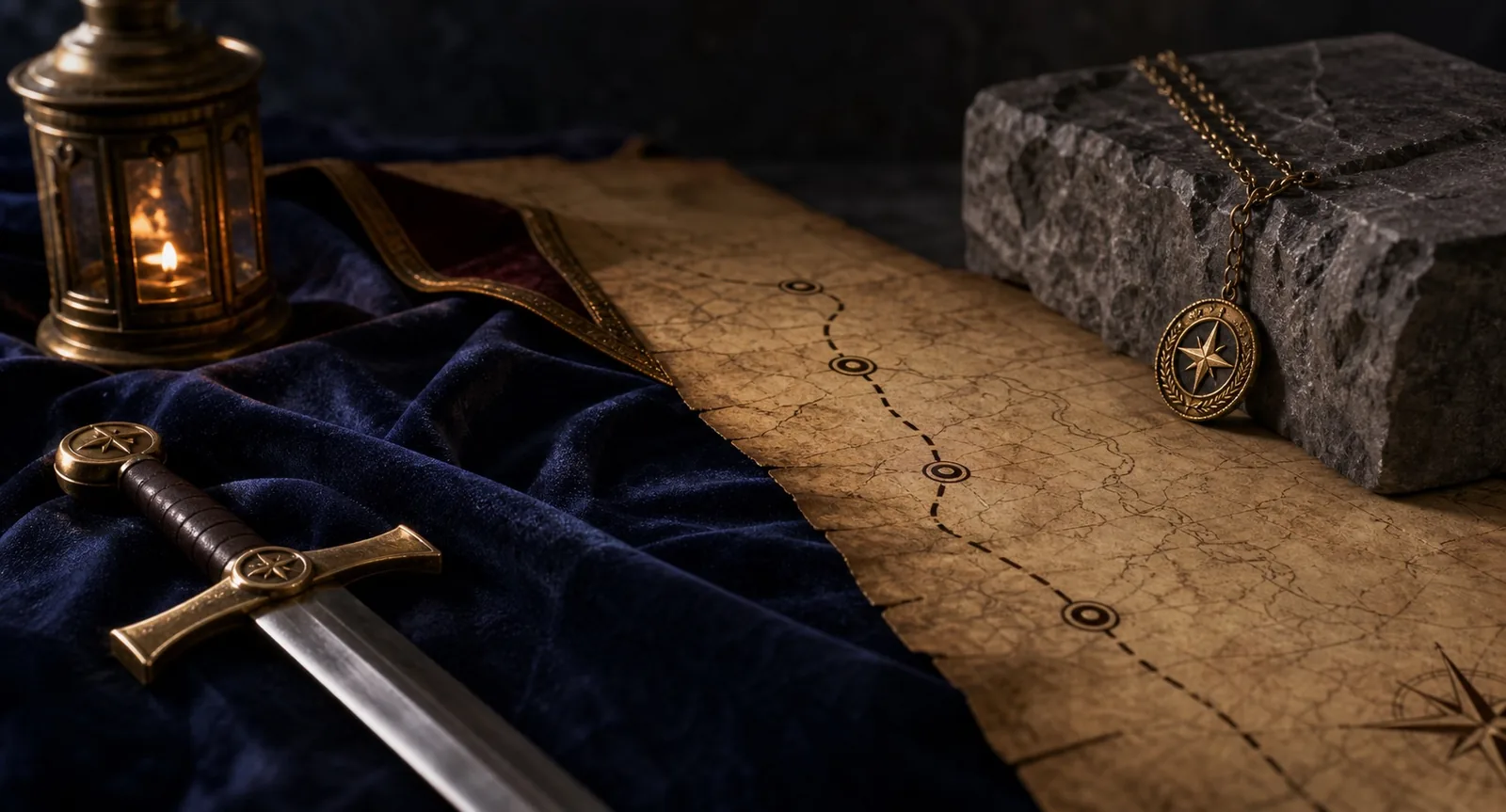
Few Masonic orders capture the imagination quite like the Masonic Knights Templar. The name immediately evokes images of crusading knights, white mantles, red crosses, pilgrimage, chivalry, sacrifice and the defence of the Christian faith. Yet the Masonic Knights Templar are not the medieval Knights Templar reborn. They are a later Masonic order inspired by the symbolism, ideals and legends of medieval Christian knighthood.
In England and Wales, the full title of the order is The United Religious, Military and Masonic Orders of the Temple and of St John of Jerusalem, Palestine, Rhodes and Malta of England and Wales and its Provinces Overseas. This long title reflects the fact that the order embraces two main traditions: the Order of the Temple, commonly known as the Knights Templar, and the Order of Malta, inspired by the Knights Hospitaller of St John.
The Masonic Templar system is Christian, chivalric and deeply ceremonial. It sits outside Craft Masonry and the Royal Arch, but requires candidates to be both Master Masons and Royal Arch Masons. In England and Wales, candidates must also profess the Christian faith, traditionally understood in Trinitarian terms.
The history of the Masonic Templars is therefore a story of symbolism rather than direct descent. It is about how medieval crusading imagery was adopted into eighteenth-century Freemasonry, organised in the nineteenth century, and preserved today as one of the most visually striking and spiritually distinctive Masonic orders.
The Medieval Knights Templar
The medieval Knights Templar were founded in the early twelfth century, traditionally around 1118 or 1119, after the First Crusade. Their original purpose was to protect Christian pilgrims travelling to Jerusalem and the Holy Land.
Their full medieval name was the Poor Fellow-Soldiers of Christ and of the Temple of Solomon. The reference to the Temple came from their headquarters on the Temple Mount in Jerusalem, granted to them by King Baldwin II.
The Templars were unusual because they combined monastic discipline with military service. They took vows similar to monks, including poverty, chastity and obedience, but also bore arms as warrior-knights. Over time, the order became wealthy and influential, receiving donations of land, money and privileges across Europe.
Their fame, wealth and independence eventually made them vulnerable. In 1307, King Philip IV of France moved against the order. Templars in France were arrested, accused of heresy and subjected to trials. In 1312, Pope Clement V suppressed the order. The last Grand Master, Jacques de Molay, was burned at the stake in 1314.
This dramatic downfall gave rise to centuries of legend. Stories of hidden treasure, secret knowledge, lost rituals and underground survival became attached to the Templar name. These legends later influenced Masonic and esoteric imagination.
No Direct Institutional Descent
It is important to be clear: modern Masonic Knights Templar do not possess proven direct institutional descent from the medieval Knights Templar.
Masonic Templar orders use Templar symbolism and chivalric themes, but they are not a continuation of the medieval order suppressed in the fourteenth century. The connection is symbolic, moral and ceremonial, not historical in a legal or institutional sense.
This distinction matters. Popular fiction often suggests that the medieval Templars survived secretly and reappeared through Freemasonry. While such ideas are entertaining, they are not supported by reliable evidence.
The Masonic Templar tradition should instead be understood as part of the eighteenth-century fascination with chivalry, crusading symbolism, Christian knighthood and the moral drama of pilgrimage.
“The connection is symbolic, moral and ceremonial, not historical in a legal or institutional sense.”
The Rise of Chivalric Masonry
During the eighteenth century, Freemasonry expanded far beyond the basic Craft degrees. Across Europe, many additional degrees and rites appeared. Some were philosophical, some Hermetic, some alchemical, some Christian, and some chivalric.
The Templar theme became especially attractive because it offered a powerful story. The candidate could be presented not simply as a builder of the Temple, as in Craft Masonry, but as a pilgrim, soldier and Christian knight.
This was a different form of Masonic symbolism. Craft Masonry uses the tools and legends of stonemasonry to teach moral lessons. Templar Masonry uses the language of pilgrimage, warfare, faith, courage and service.
In this sense, Masonic Templarism did not replace Craft Masonry. It extended the Masonic imagination into a chivalric Christian setting.
Early Masonic Templar Activity in England
The earliest known reference to modern Masonic Knight Templar activity in England is found in the records of the Chapter of Friendship at Portsmouth in 1778. There, the Templar ceremony was worked as an appendant degree connected with Royal Arch Masonry.
This is significant because it shows that the order did not begin as a fully independent organisation. Like many additional degrees in the eighteenth century, it was initially worked in connection with existing Masonic bodies.
At that time, the boundaries between lodges, chapters and additional degrees were less rigid than they are now. Various ceremonies circulated among Masons and were adopted where interest existed.
The Portsmouth reference demonstrates that by the late eighteenth century, Templar Masonry had already gained a foothold in England.
Thomas Dunckerley and the Grand Conclave of 1791
A major moment came in 1791 when a Grand Conclave was formed, consisting of seven Encampments. Thomas Dunckerley became Grand Master.
Dunckerley was one of the most influential figures in eighteenth-century English Freemasonry. He was involved in several Masonic orders and played a major role in organising and regularising degrees that had previously been worked in a more scattered fashion.
The formation of the Grand Conclave gave the English Masonic Templars a central governing body. This was essential for stability. Without central organisation, additional degrees could easily become inconsistent, irregular or dormant.
The word “Encampment” reflected the military and chivalric nature of the order. Later, in 1873, Grand Conclave became known as Great Priory, and Encampments became Preceptories. These terms remain characteristic of the order today.
The Order of the Temple
The central ceremony of the Masonic Knights Templar is the Order of the Temple.
In England and Wales, the candidate symbolically takes the part of a pilgrim journeying in a Christian chivalric setting. Through the ceremony, he is admitted into the order and elevated to knighthood.
The ceremony is dramatic, visual and solemn. Its regalia draws heavily on medieval imagery, particularly the white mantle and red cross associated with the Templars.
The order emphasises Christian faith, courage, humility, self-discipline and service. Its symbolism is not merely military. The sword, cross and pilgrimage are used as moral and spiritual symbols.
The Templar is not simply a warrior. He is a Christian pilgrim-knight, called to defend truth, practise charity and live with integrity.
The Royal Arch Connection
In England and Wales, a candidate for the Knights Templar must be a Royal Arch Mason.
This requirement reflects the historical and symbolic relationship between the order and the Royal Arch. The medieval Templars’ association with the Temple Mount in Jerusalem provides an imaginative link with the Royal Arch’s Temple symbolism.
The Royal Arch deals with recovery, completion and sacred discovery. The Templar order moves the candidate into a Christian chivalric interpretation of pilgrimage and sacred duty.
This is why the Masonic Templar order is not usually approached immediately after Craft Masonry. The candidate must first have completed the Craft journey through the Royal Arch before entering the chivalric path.
The Order of Malta
Closely associated with the Masonic Knights Templar is the Order of Malta.
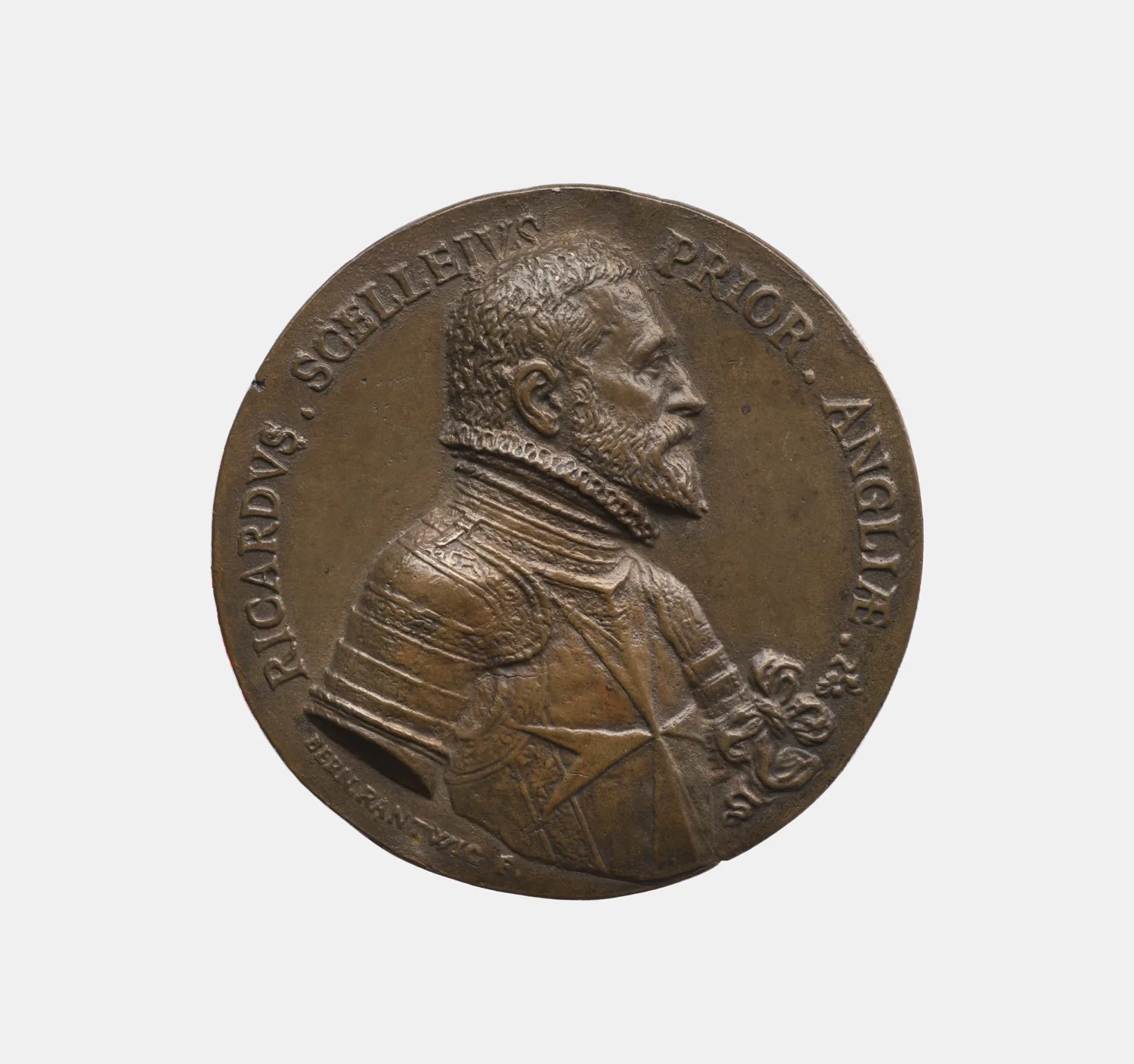
The medieval Knights Hospitaller, or Order of St John, began as a charitable and hospitaller order caring for pilgrims and the sick in Jerusalem. Over time, it too became a military order. After the loss of the Holy Land, the Hospitallers were associated successively with Rhodes and Malta.
In Masonic practice, the Order of Malta is an appendant order to the Knights Templar. In England and Wales, a candidate must first be a Knight Templar before receiving Malta. Possession of the Malta degree is also required before becoming Eminent Preceptor of a Templar Preceptory.
The Order of Malta adds another dimension to Masonic chivalry. If the Temple emphasises pilgrimage, knighthood and Christian struggle, Malta brings forward themes of hospitality, service, healing and care for the distressed.
Its ceremony is preceded by a shorter “passing” ceremony associated with St Paul and the island of Melita, or Malta.
Temple and Malta United
The combined English and Welsh title of the order reflects the union of the Temple and Malta traditions.
The governing body is the Great Priory of the United Religious, Military and Masonic Orders of the Temple and of St John of Jerusalem, Palestine, Rhodes and Malta of England and Wales and its Provinces Overseas.
This title may appear unwieldy, but it tells the story of the order’s identity. It brings together the Templar and Hospitaller streams of medieval Christian chivalry within a Masonic framework.
The Temple provides the dominant identity, but Malta is not an afterthought. It is a companion order with its own symbolism and ceremonies.
Together they form one of the most coherent Christian chivalric systems within English Freemasonry.
From Encampments to Preceptories
The terminology of the order reflects its military and religious character.
Originally, local bodies were known as Encampments. This echoed the idea of a military camp or crusading body. In 1873, these became known as Preceptories, while Grand Conclave became Great Priory.
A Preceptory is the local unit of the Knights Templar. It is led by an Eminent Preceptor. The terminology of the order includes titles such as Knight, Preceptor, Prior and Great Priory, all of which reinforce its chivalric identity.
The adoption of this language was part of the order’s nineteenth-century consolidation. It helped distinguish the Templar system from Craft lodges, Royal Arch chapters and Mark lodges.
The Christian Character of the Order
The Masonic Knights Templar in England and Wales are explicitly Christian.
This distinguishes them from Craft Masonry under the United Grand Lodge of England, which requires belief in a Supreme Being but does not require adherence to any particular religion.
The Templar order, by contrast, is built around Christian symbolism, Christian pilgrimage and Christian knighthood. Candidates must be Master Masons, Royal Arch Masons and Christians.
This Christian requirement explains why the order remains separate from Craft Masonry. UGLE’s Craft system is deliberately broad in its religious basis. The Knights Templar, being specifically Christian, require their own governance and identity.
The order therefore occupies a particular place in the Masonic landscape: it is Masonic, but it is not universal in the same way as the Craft.
The Red Cross of Constantine
Although not part of the Knights Templar system, the Masonic and Military Order of the Red Cross of Constantine is often viewed as a related Christian chivalric companion order.
Its full structure includes the Red Cross of Constantine and the appendant Orders of the Holy Sepulchre and St John the Evangelist.
The present order was firmly established in 1865 by Robert Wentworth Little, although earlier Red Cross bodies existed before that. It is sometimes described as a Christian Royal Arch order because of its relationship to Royal Arch symbolism and its Christian character.
The Red Cross of Constantine is based on the legend of Emperor Constantine and the vision of the Cross. It explores themes of conversion, faith, victory, leadership and Christian witness.
Like the Knights Templar, it is a Christian order. It requires candidates to be Royal Arch Masons and to profess the Christian faith.
The Orders of the Holy Sepulchre and St John the Evangelist
The Red Cross of Constantine includes two important appendant orders: the Order of the Holy Sepulchre and the Order of St John the Evangelist.
These orders deepen the Christian and symbolic character of the Red Cross system. They are not the same as the Masonic Knights Templar or the Order of Malta, but they share a related world of Christian sacred history and chivalric imagery.
The Holy Sepulchre naturally evokes Jerusalem, pilgrimage, death, resurrection and sacred guardianship. St John the Evangelist connects the order with Johannine Christian symbolism and the spiritual interpretation of light, truth and divine revelation.
Together with the Red Cross of Constantine, these orders form one of the most explicitly Christian systems in English Freemasonry.
The Knights Beneficent of the Holy City
Another order closely associated with the wider chivalric tradition is the Knights Beneficent of the Holy City, connected with the Rectified Scottish Rite.
This order has its roots in the eighteenth-century European Rite of Strict Observance, a system that claimed Templar inspiration and became influential in continental Freemasonry. At the Assembly of Wilhelmsbad in 1782, the Strict Observance was reformed into the Rectified Scottish Rite.
The English and Welsh body is known as the Grand Priory of the Holy City of the Rectified Scottish Rite of England and Wales.
Membership is by invitation and requires a candidate to be a Knight Templar. This makes it one of the clearest examples of a companion order that builds upon the Templar foundation.
Its highest degree, Knight Beneficent of the Holy City, presents a more spiritualised and interior form of Christian knighthood. It is less about crusading drama and more about moral rectification, charity and the inner discipline of the Christian knight.
Templarism and the Strict Observance
The Rite of Strict Observance deserves mention because it was one of the most influential Templar-themed Masonic movements of the eighteenth century.
It arose in Germany around the middle of the eighteenth century and claimed a form of Templar continuity. Its appeal lay in the idea that Freemasonry preserved hidden chivalric or Templar secrets.
Although its historical claims did not withstand scrutiny, its symbolic influence was immense. It helped shape continental Masonic Templarism and contributed to the development of systems such as the Rectified Scottish Rite.
The Wilhelmsbad Convention of 1782 was especially important because it marked a move away from literal claims of Templar survival and towards a more spiritual and moral interpretation of Christian chivalry.
This shift mirrors the best way to understand Masonic Templarism today: not as historical survival, but as symbolic inheritance.
Templar Masonry and the York Rite
In some countries, especially the United States, the Knights Templar form part of the York Rite.
The American York Rite usually includes Royal Arch Masonry, Cryptic Masonry and the Chivalric Orders, culminating in the Order of the Temple. This differs from the English and Welsh system, where the Knights Templar exist as a separate order governed by Great Priory.
This difference can cause confusion. A Mason reading American material may encounter references to Commanderies, the Illustrious Order of the Red Cross, the Order of Malta and the Order of the Temple. In England and Wales, the structure and terminology are different.
The English system uses Preceptories and Great Priory, and the Order of Malta is attached to the Templar order in its own particular way.
The shared symbolism is similar, but the constitutional arrangements are not identical.
Templar Regalia and Ceremony
The visual identity of the Masonic Knights Templar is one of its most memorable features.
The regalia is based on medieval knightly imagery, including mantles, tunics, crosses, swords, belts and caps. The dominant colours are often white, black and red, reflecting themes of purity, solemnity, sacrifice and Christian service.
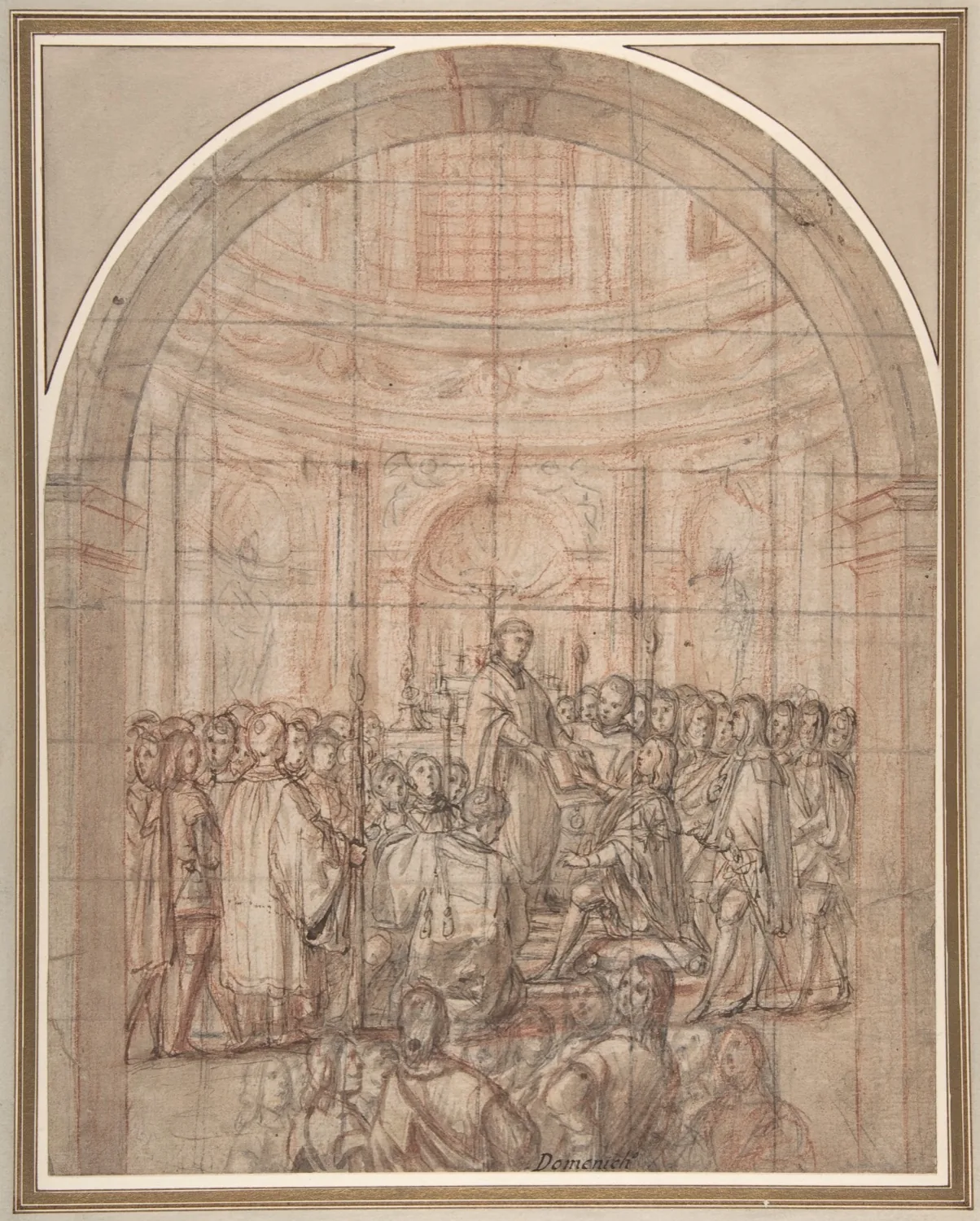
The ceremony is also highly theatrical. It presents the candidate as a pilgrim and uses movement, dialogue, obligation and symbolic challenge to create a powerful initiatory experience.
This realism is intentional. The order aims to make the candidate feel that he has entered a different world from the Craft lodge or Royal Arch chapter.
The effect is not merely decorative. The ceremony uses chivalric drama to teach moral and spiritual lessons.
The Moral Ideals of Masonic Templarism
The Masonic Knights Templar are concerned with much more than historical pageantry.
The order teaches ideals of courage, fidelity, humility, service and faith. The candidate is encouraged to see himself as a pilgrim engaged in a moral and spiritual journey.
The sword symbolises discipline and defence of truth. The cross symbolises sacrifice and redemption. The mantle symbolises purity of life and the assumption of knightly responsibility.
The order’s chivalric language may be medieval, but its teachings are intended to be practical. A Masonic Knight Templar is called to live honourably, serve others, uphold Christian principles and show compassion.
In this sense, Templar Masonry is not about nostalgia. It is about forming character through the symbolism of Christian knighthood.
Why the Templars Remain Separate from Craft Masonry
The Knights Templar remain separate from UGLE and Craft Masonry for several reasons.
First, the order is explicitly Christian, whereas Craft Masonry is open to men of many faiths who believe in a Supreme Being.
Second, the order uses chivalric rather than stonemasonic symbolism. Its language, ceremonies and regalia belong to a different symbolic world.
Third, it historically developed as an additional or appendant order rather than as part of the three Craft degrees.
Fourth, it requires Royal Arch membership, placing it beyond the basic Craft structure.
This separation allows the order to preserve its distinctive Christian and knightly character without altering the broader religious inclusivity of Craft Masonry.
Modern Administration from Mark Masons’ Hall
In England and Wales, the Knights Templar and Knights of Malta are administered from Mark Masons’ Hall in London.
This does not mean that they are Mark degrees. Mark Masons’ Hall acts as an administrative centre for several companion orders, each with its own identity and governance.
The Templar order remains under Great Priory. Its local bodies are Preceptories. The Order of Malta is contained within the same united structure.
This administrative arrangement provides a practical home for the order while preserving its separate character.
Conclusion
The Masonic Knights Templar are among the most distinctive and evocative orders in the wider Masonic family.
Their history begins not with direct descent from the medieval Templars, but with the eighteenth-century adoption of Templar symbolism into Freemasonry. From early workings in places such as Portsmouth, through the formation of Grand Conclave in 1791 under Thomas Dunckerley, to the later development of Great Priory and Preceptories, the order became one of the principal Christian chivalric bodies in English Freemasonry.
Its associated Order of Malta adds the Hospitaller themes of care, service and pilgrimage. Related companion orders such as the Red Cross of Constantine and Knights Beneficent of the Holy City broaden the wider Christian chivalric landscape.
Together, these orders preserve a form of Masonic spirituality that is dramatic, Christian, knightly and deeply symbolic.
For the Mason who enters the Templar path, the journey is no longer framed only by the tools of the builder. It becomes the journey of the pilgrim and the knight: a path of faith, service, courage and sacrifice.
A concise chronology
- The medieval Templars emerge
A military-religious order forms to protect Christian pilgrims in the Holy Land.
- Suppression and aftermath
Pope Clement V suppresses the order; Jacques de Molay is executed in Paris.
- Portsmouth record
The Chapter of Friendship provides an early documented English Masonic Templar reference.
- Wilhelmsbad
The Strict Observance is redirected away from literal Templar succession towards a reformed chivalric system.
- Grand Conclave
Seven Encampments form a central English governing body under Thomas Dunckerley.
- Red Cross organisation
The modern English Red Cross of Constantine is firmly established under Robert Wentworth Little.
- Great Priory terminology
Grand Conclave becomes Great Priory and local Encampments become Preceptories.
- Distinct chivalric paths
Temple, Malta and related Christian orders retain separate governance and qualifications.