
Christian chivalric order / Scotland
Great Priory of Scotland
The Great Priory of Scotland governs the Masonic Order of the Temple and of St John of Jerusalem, Palestine, Rhodes and Malta within Scotland. It is explicitly Christian, chivalric and Scottish-governed, with Preceptories and Priories rather than Craft Lodges or Royal Arch Chapters.
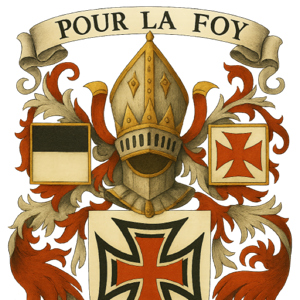
This guide explains the public Christian or chivalric character of Great Priory of Scotland, including the qualifications and local commitments that should be checked before an enquiry. By Beyond the Craft Editorial Team · Published 14 June 2026 · Last reviewed 21 June 2026 · 8 min read.
What it is
Great Priory of Scotland is an optional Masonic route with its own qualifications and administration. It should be considered for its continuing work, not treated as a promotion or an inevitable next rank.
Why people explore it
Christian Masons attracted to pilgrimage, service, chivalric history and formal ceremonial work.
What not to assume
Great Priory of Scotland is not a rank above Craft Masonry and is not automatically equivalent to a similarly named system in another jurisdiction.
Documented chronology
The official history records Scottish high-degree and Templar-related activity at Scoon and Perth and a Kilwinning charter connected with high Knight Templars in Ireland. [1]
The Duke of Kent granted a charter setting up the Royal Grand Conclave of Scotland, with Alexander Deuchar as Grand Master. [1]
The Great Priory describes itself as the governing body for the Masonic Order of the Temple and of St John within Scotland. [1] [2]
A Christian chivalric Scottish body
The official homepage identifies the Great Priory as the governing body for the Masonic Order of the Temple and of St John of Jerusalem, Palestine, Rhodes and Malta within Scotland. That gives it a distinct structure from Craft Lodges or Royal Arch Chapters. [1]
It works through Preceptories, Priories and District Grand Priories, with ceremonial, charitable and administrative life shaped by Christian chivalric symbolism. [1]
History without Templar survival romance
The Great Priory's own history states that the tradition of legitimate descent from the crusading Order is not supported by documentary proof. That sentence should guide the whole page. [1]
The documented Scottish Masonic story is interesting enough: late-eighteenth-century high-degree activity, Irish and English charter routes, and the 1811 Royal Grand Conclave of Scotland under Alexander Deuchar. [1] [3]
How it differs from Royal Arch and the Rite
Great Priory is not the Scottish Royal Arch route and not the Ancient and Accepted Rite. Its identity is Christian, chivalric and Templar-Hospitaller rather than Temple-vault, rebuilding or Rose Croix philosophy. [1] [2]
Readers should compare actual governance and eligibility rather than simply matching words such as Temple, Knight or Scottish. These terms recur across Masonic bodies without creating one authority. [1] [3]
Who may value it
Great Priory may suit Christian Masons attracted to pilgrimage, service, formal chivalric ceremony and a strong Scottish Templar tradition. [1]
It may not suit someone looking for a non-Christian body, esoteric research or a first appendant step with light regalia. The Royal Arch Series and the Ancient and Accepted Rite are different pathways. [1] [2]
Key distinction
Scottish Masonic Templary commemorates chivalric and Christian themes but the Great Priory's own history says documentary proof for direct descent from the medieval Templars is lacking.
Key questions
Frequently asked questions
What most distinguishes Great Priory of Scotland?
Scottish Masonic Templary commemorates chivalric and Christian themes but the Great Priory's own history says documentary proof for direct descent from the medieval Templars is lacking.
Who may join Great Priory of Scotland?
The orders are explicitly Christian. Masonic prerequisites, profession of faith, sponsorship and local availability must be confirmed with Great Priory. Confirm the present faith declaration, prerequisite memberships and local admission route with the governing body.
How should its history be understood?
The official history records Scottish high-degree and Templar-related activity at Scoon and Perth and a Kilwinning charter connected with high Knight Templars in Ireland. The Christian or chivalric setting is symbolic context; documentary continuity must come from dated records of the modern body.
What should I compare with Great Priory of Scotland?
Start with Scottish Royal Arch Series and Ancient and Accepted Scottish Rite in Scotland. Compare faith wording, prerequisite memberships, governing body and ordinary ceremonial commitment.
- Great Priory of Scotland: official homepage ↗Great Priory of Scotland · Official organisational source · Retrieved 21 June 2026 · Supports: current governance, 1811 history, Christian chivalric identity.
- Grand Lodge of Scotland: orders in Scotland ↗Grand Lodge of Scotland · Official organisational source · Retrieved 21 June 2026 · Supports: Scottish order landscape, Craft relationship, separate governance.
- SGRAC Scotland: history ↗Supreme Grand Royal Arch Chapter of Scotland · Official organisational source · Retrieved 21 June 2026 · Supports: Royal Arch and Templar regularisation, Deuchar context, Scottish high degrees.
Continue exploring
Related Reading
An invitational body preserving a collection of additional Masonic degrees and encouraging research and fellowship.
Scotland guideRed Cross of Constantine in ScotlandA Christian Masonic and military order worked through Conclaves under a Scottish governing jurisdiction.
Scotland guideHoly Royal Arch Knight Templar Priests and Holy Wisdom in ScotlandChristian Masonic orders governed by the Grand College at York and represented through authorised Tabernacles.